
I started dabbling in dahlia hybridizing way back in 2017 and have bred more than 300 varieties in the years since. Over time, as the focus of our farm has evolved, my hybridizing focus has changed as well.
Back when we were primarily cut flower growers selling large volumes of bunched blooms to grocery stores and florists, we focused on a combination of bright, bold, ball-shaped varieties that would hold up well on display and dinner plate varieties in a soft pastel range for our design customers.
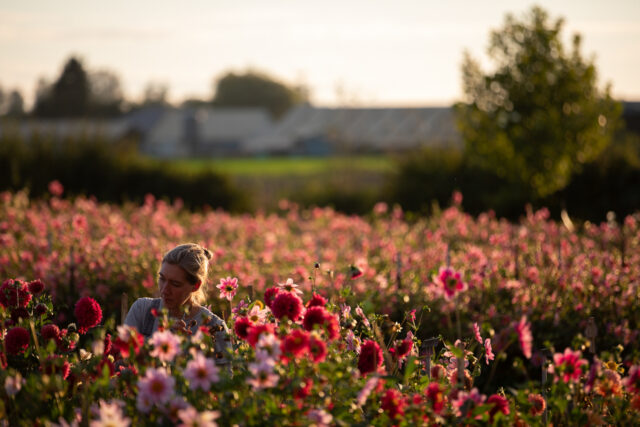 When I look back I can see that my early breeding efforts mirrored what we were doing at the time and the varieties that I developed were much larger, showier, and more uniform in their appearance because that’s what we needed more of.
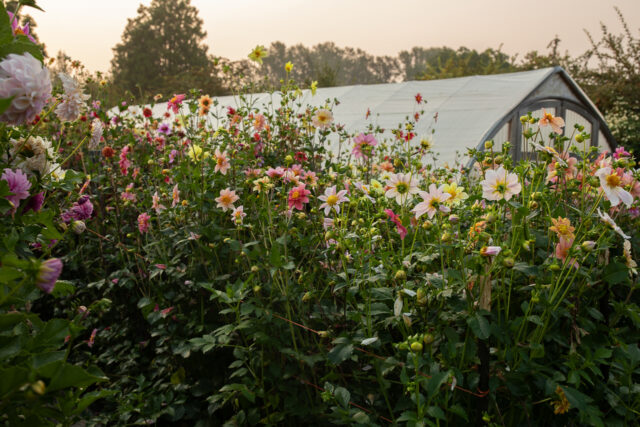
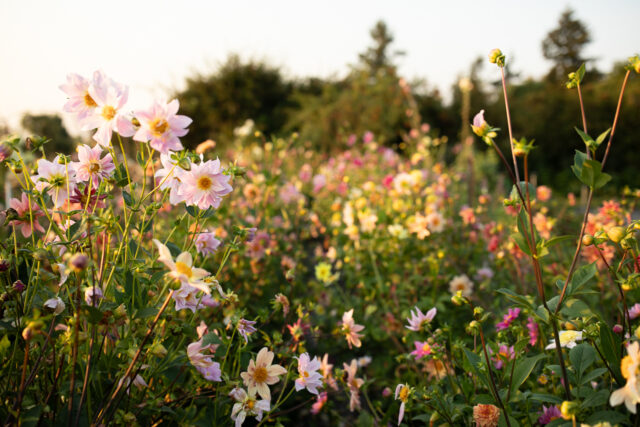 Nowadays, my focus has shifted once again. I’m much more interested in breeding varieties that are attractive to pollinators, perform well in the garden with minimal care, and lend themselves to carefree and somewhat wild-looking arrangements.
The current challenge that I’m facing is that most collarettes and other open-centered types don’t last nearly as well in the vase as fuller forms, oftentimes dropping their petals in just a day or two.
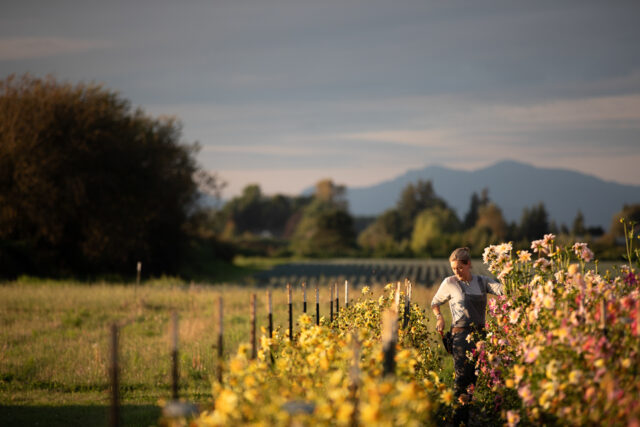 But I’ve been making some really great progress over the last few summers and now have a few dozen long-lasting beauties in the works that I hope will be well received by flower arrangers, gardeners, and bumblebees!
In addition to developing brand-new cultivars, I’ve also been working on investigating which of the varieties make the most beautiful offspring.
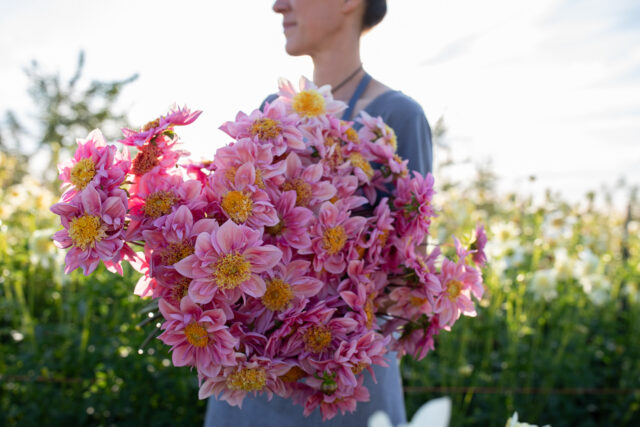
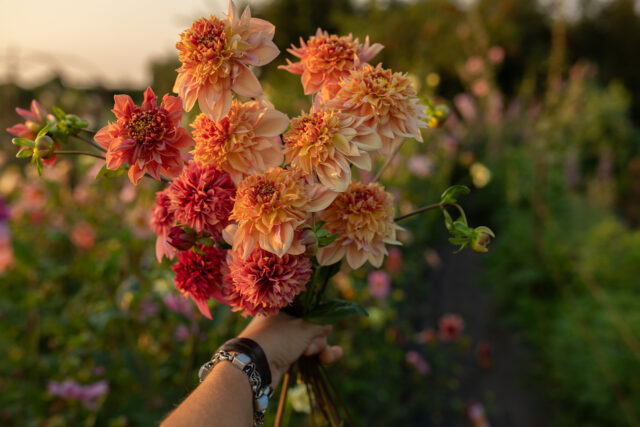
 ‘Floret’, or C33 (pictured above), is a peachy-pink anemone/collarette with the most unusual lavender undertone. She was the first variety to catch my attention when I discovered that a very high percentage of the babies that came from her seeds were absolutely stunning.
I don’t know what it is about her that makes such beautiful children, but it seems like every single seedling could be a keeper. Normally, when it comes to seedlings, I keep about 1 percent of what we plant, but with ‘Floret’ I found myself keeping upwards of 30 percent, sometimes more.
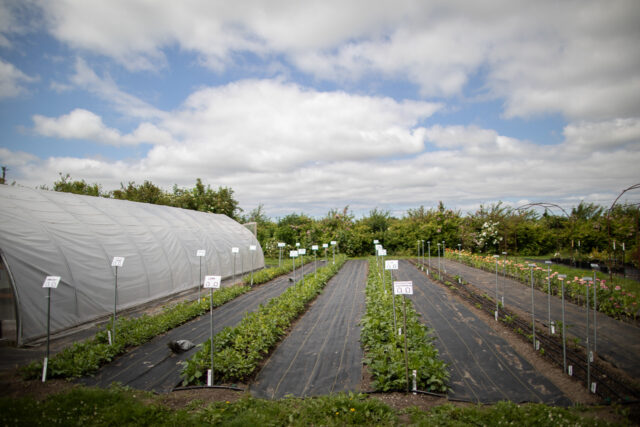
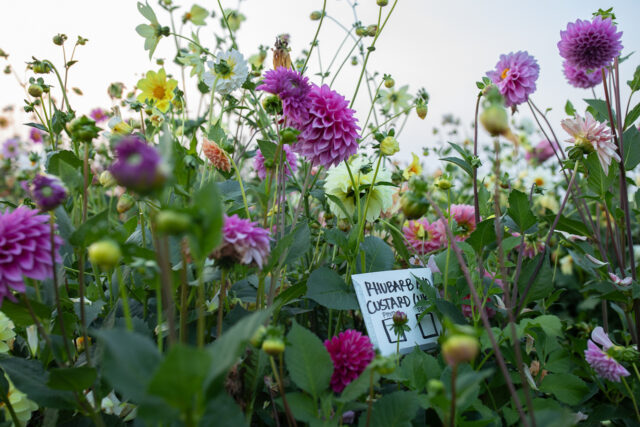 I’ve continued collecting seeds from different varieties, both in the breeding patch and also from some named commercial varieties, to see which ones show promise as parents.
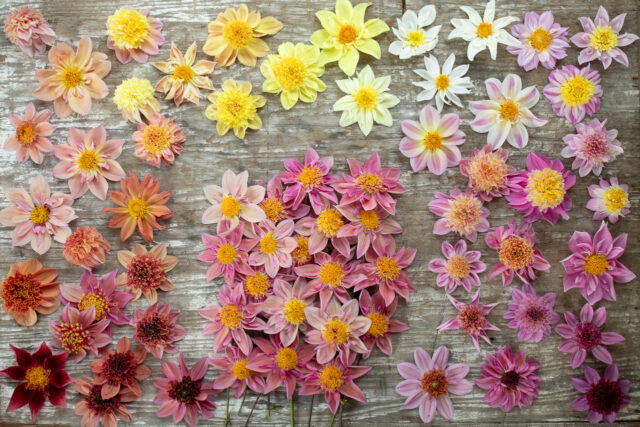
 If you’re new to growing dahlias from seed or would like to understand how hybridizing works, read this post. I thought it would be fun to share some photos we took from this ongoing experiment so you could see for yourself what’s happening here on the farm.
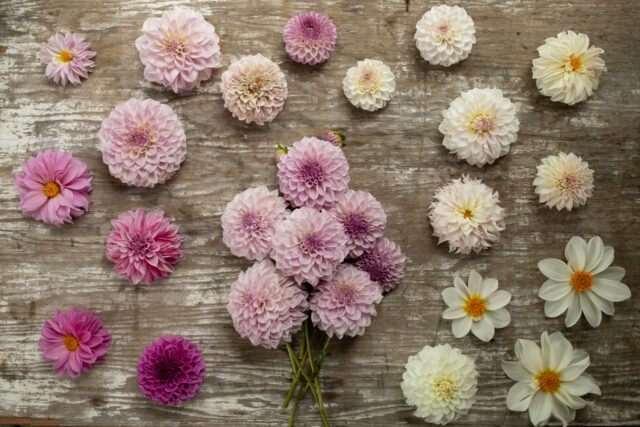
The photos do a great job of illustrating what traits are being passed on from the parent plants. In the center of the board, I placed a bundle of flowers harvested from the parent and arranged flowers collected from their offspring around them, loosely grouped by color.
 What I’ve found is that oftentimes more full, rounded blooms (such as balls and formal decoratives) usually produce more full, rounded offspring, collarettes tend to have a high percentage of babies with an extra ring of petals around the center, yellow varieties seem to produce many yellow children, and so on.
I still have so much to learn about how it all works, but a lot of things are starting to click. Here’s a look at some of the seed parents and offspring I’ve been growing out over the past few seasons.
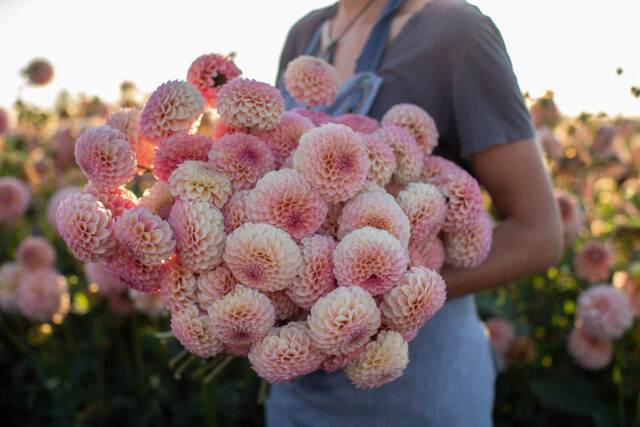
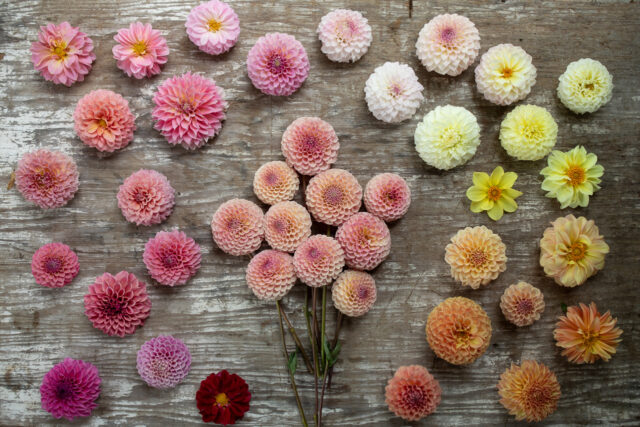 Dahlia C199 (pictured above)
One of the most beautiful colored ball varieties I’ve ever seen! These opalescent peachy-blush flowers have a soft metallic lavender eye. Tall plants produce an abundance of flowers on long, strong stems that last exceptionally well in the vase.
Its offspring came in a literal rainbow of colors, but for the most part, they all had a similar soft coloring and fuller flower form.
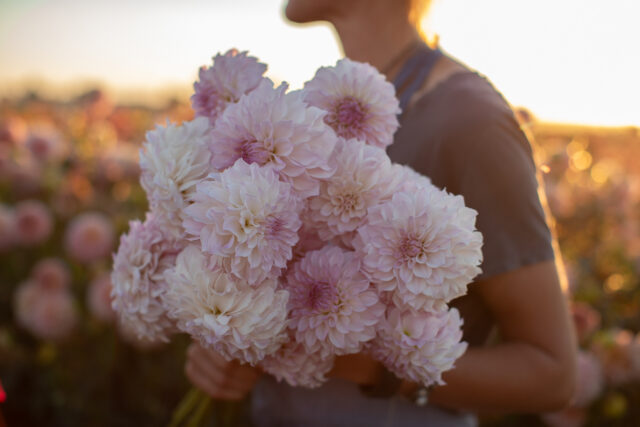
Dahlia E14 (pictured above)
These towering, 7-ft-tall plants are loaded with the palest blush-lavender blooms which would be a total game changer for wedding work, especially large-scale arrangements.
Its offspring were all extremely tall—not one of them was under 6 ft—and flowered in a range of purples, lavenders, and whites.
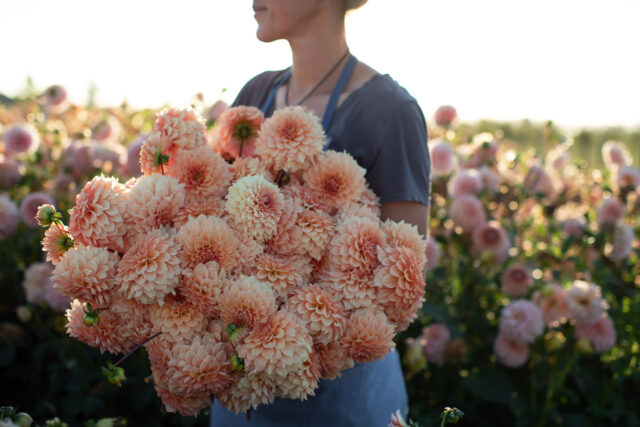
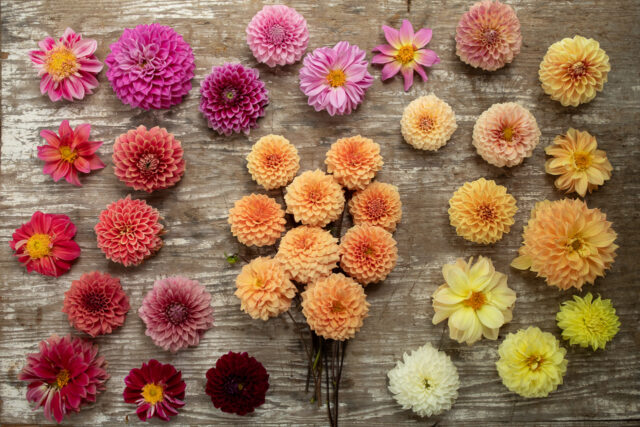 Dahlia B5 (pictured above)
This was one of the very first varieties in the breeding program, and its soft orange flowers have beautiful dark chocolate stems. Unfortunately, its centers often pop open once the flowers are more mature, and as you’ll notice, many of its offspring do the same.
Seedlings bloomed in a wide range of colors, many with a muted, slightly antiqued quality and similarly shaped flower form.
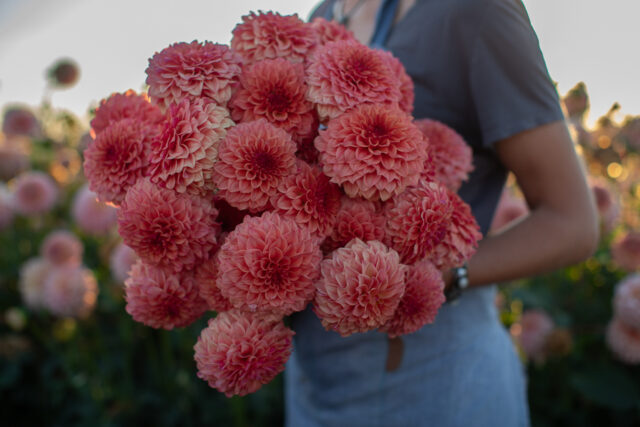
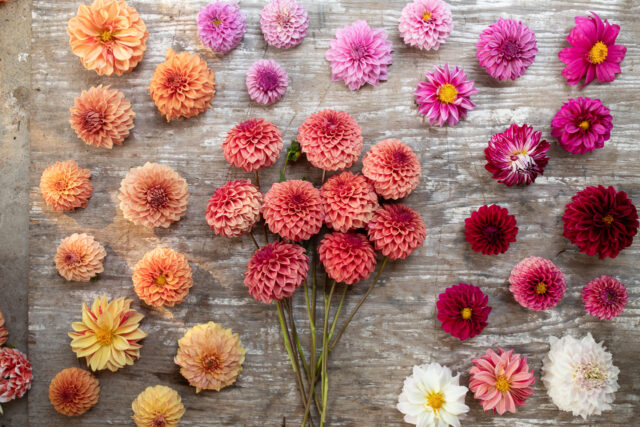 Dahlia C330 (pictured above)
These 5-ft-tall plants have medium-size smoky coral flowers with a dense, formal decorative form. Its offspring had a very high percentage of domed flowers and came in a smoky, jewel-toned rainbow. Quite a few of them had a popped-open center, which was a little disappointing.
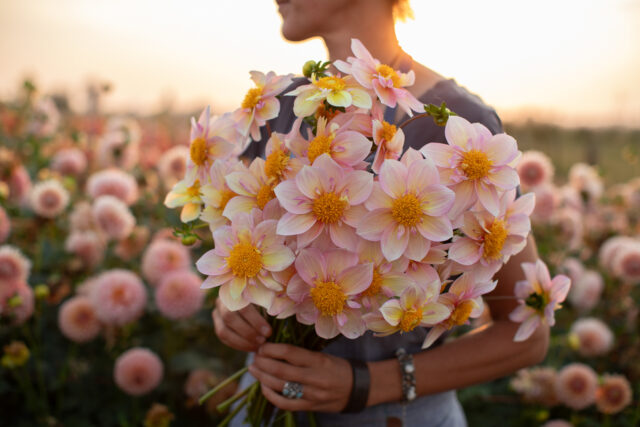
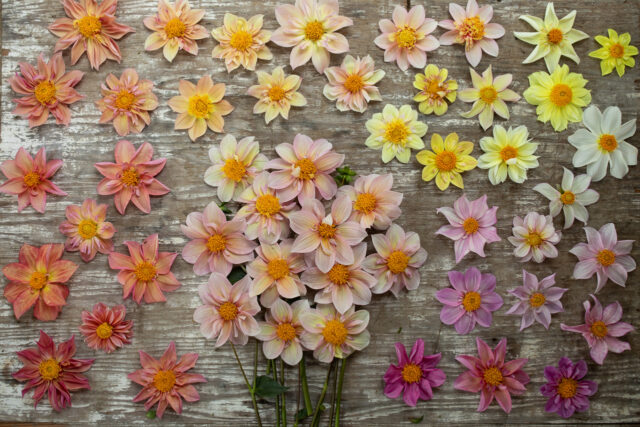 Dahlia C21 (pictured above)
One of my all-time favorite varieties, this beauty was discovered in seed that I collected from ‘Appleblossom’ many years ago. The tall plants are covered in flowers all season long, and while the outer ring of petals is slightly inconsistent, they have such a lovely buttery blush coloring and long vase life that they just keep making the cut.
Hands down one of the best seed parents I’ve discovered, nearly all of C21’s babies were keepers. Most of the flowers came in a muted color range and many had either a collarette form or pointed petal tips.
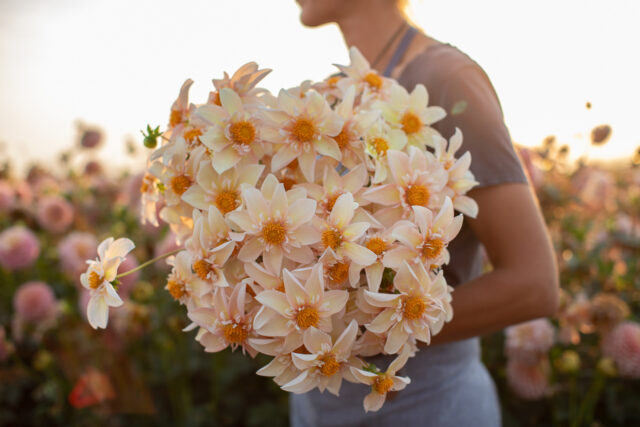
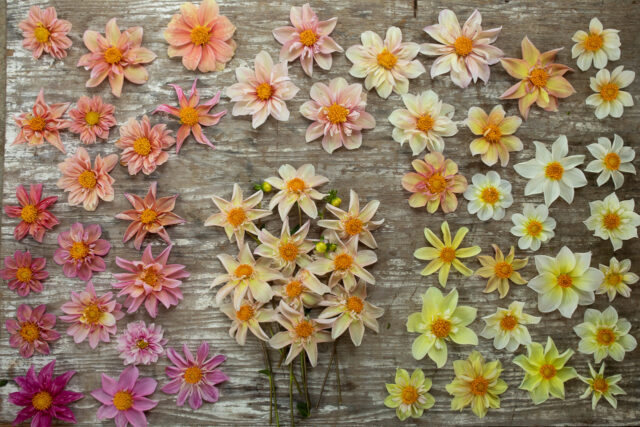 Dahlia C37 (pictured above)
The 6-ft-tall, heavily branching plants are smothered in the most darling soft blush collarette flowers that are gently washed with buttercream. During the height of summer, they are covered in bees, and by the end of the day, the flowers are coated with a layer of yellow pollen.
This was another exceptional seed parent, with a very high percentage of its offspring having either a collarette form or wavy, pointed petals. I love the soft pastel color range and am really excited about this one in particular.
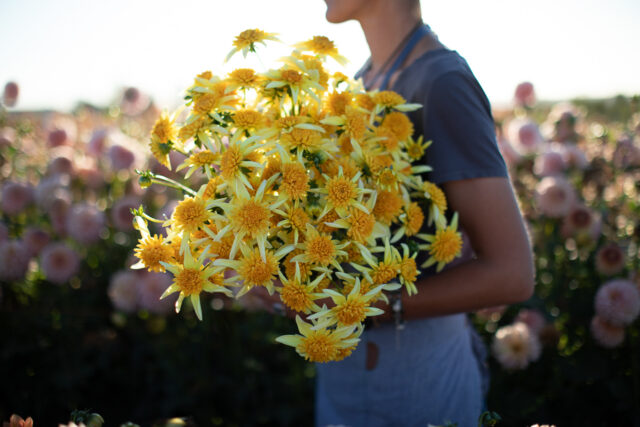
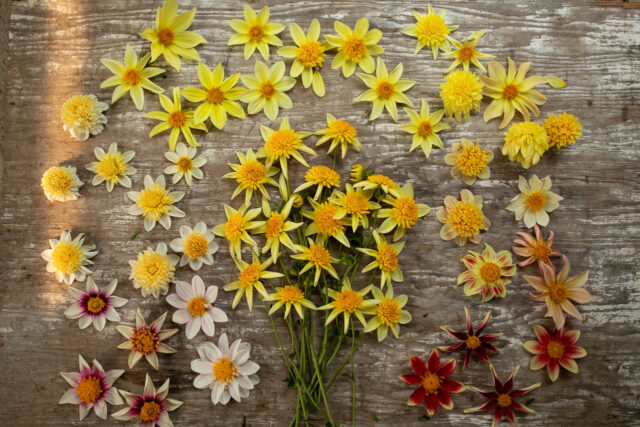 Dahlia C171 (pictured above)
One of the first varieties that I bred, this cheerful, early-flowering darling looks just like a child’s drawing of the sun and we lovingly refer to her as Little Miss Sunshine.
I had high hopes that her offspring would possess the same unique flower form that she does (a dense, fuzzy center with long, incurved, pointed petals), but so far she seems to be one of a kind. Her offspring had a very high percentage of yellow blooms and were a mix of singles and anemone forms, many with bicolor patterning.
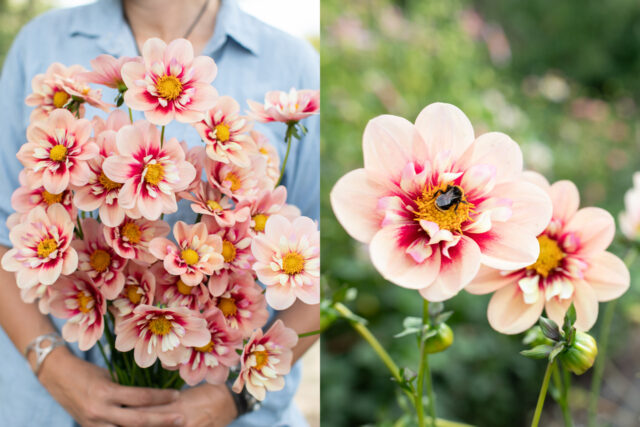
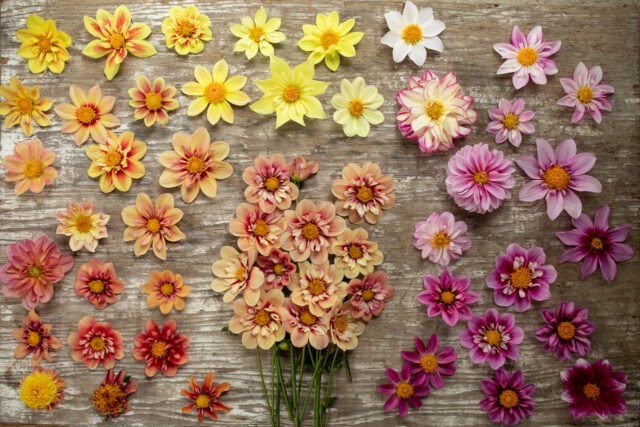 Dahlia ‘Rhubarb and Custard’ (pictured above)
This incredibly hard-to-find collarette bred by Dr. Keith Hammett in New Zealand was even more beautiful than I expected. The long-lasting flowers start a warm buff-apricot and darken as they age, taking on a rosy glow. They have a deep red ring around their golden centers, with a layer of lighter petals giving them a fluffy, dessert-like appearance.
Many of its offspring have a similar darker coloring around their center and a collarette form. Overall, I would say that this variety makes an excellent seed parent, with so many keepers in the mix.
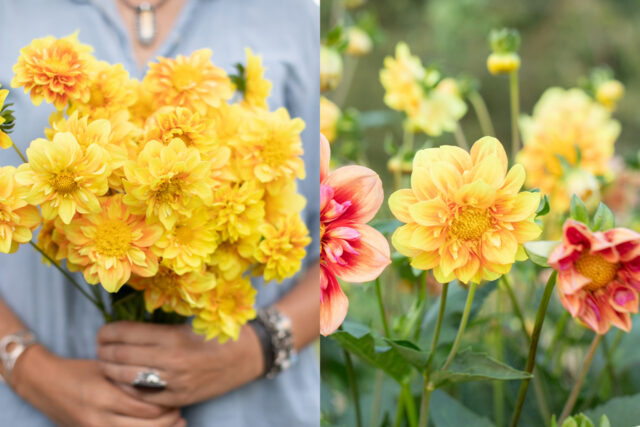
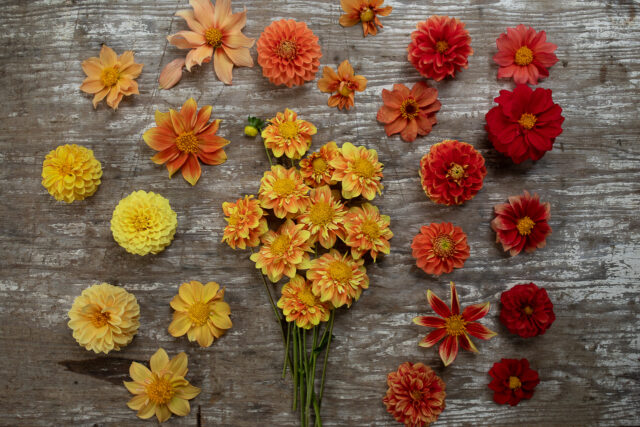 Dahlia ‘Coseytown Honey Pot’ (pictured above)
‘Coseytown Honey Pot’, bred by LeeAnn Huber at Coseytown Dahlias, is a very unusual novelty that has three alternating layers of outer petals that are orange with gold tips. Their fuzzy yellow centers are encircled by a ring of shorter golden petals and I’ve never seen anything like it. A fun fact is that ‘Coseytown Honey Pot’ was discovered in a packet of our Bee’s Choice seed mix.
Its offspring were a mix of yellow, gold, orange, rusty red, and ruby flowers. Many had two-tone petals like their mother, but none possessed the same amazing form.
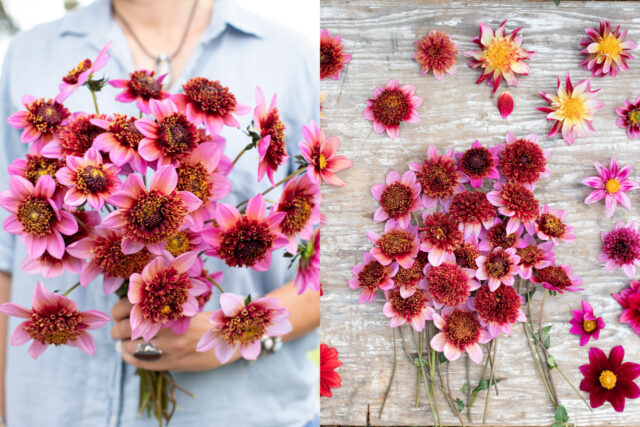
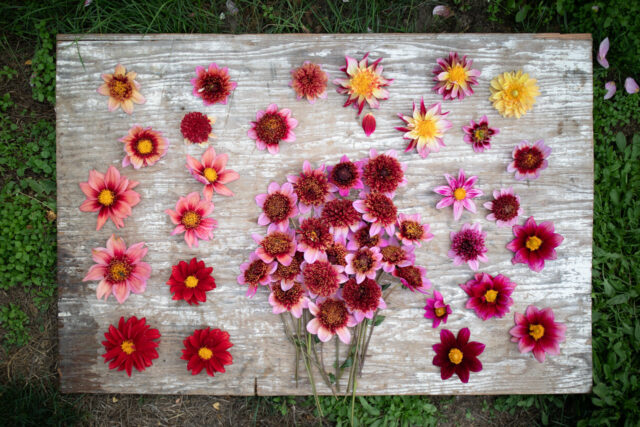 Dahlia ‘The Phantom’ (pictured above)
With its smoky lavender-purple outer petals and dense, reddish-maroon tufted centers tipped in gold, this incredible variety looks like nothing else on the market. It is also an excellent, long-lasting cut flower.
It makes a wonderful seed parent, with many uniquely colored offspring. I only grew a few of these, but there were some great surprises, including some really special anemones. Many had a similar striking, rich color combination. Flowers ranged in color from dark cherry to smoky coral, maroon/red, and purple. Some had streaking or a ring of rich color, and the lighter-colored flowers had dark back petals.
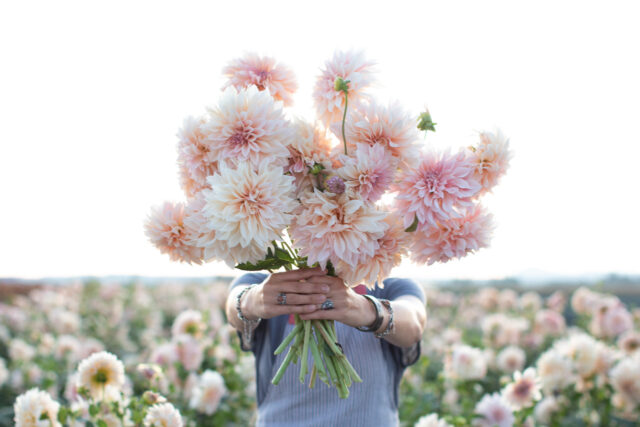
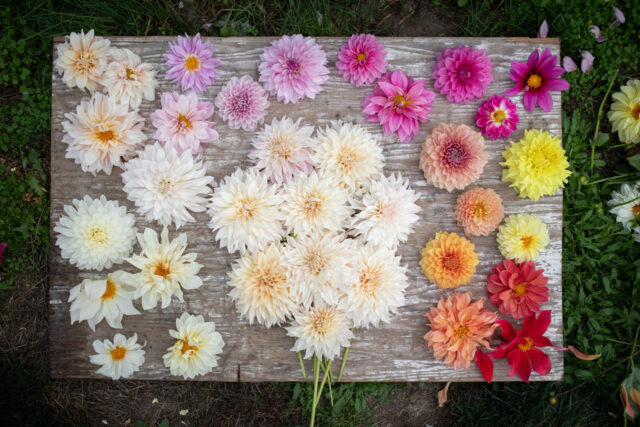 Dahlia ‘Café au Lait’ (pictured above)
Of all the dahlias I’ve ever grown, ‘Café au Lait’ might be the most memorable. She is lovingly referred to as the queen of dahlias and it’s easy to see why she has such a loyal and wide-reaching fan club. Her massive, creamy beige-blush pink flowers can get as large as a dinner plate and she is one of the most requested varieties for wedding work.
Nearly all of her offspring had a similar plant habit to hers and you could definitely tell that they were related. The tall plants had thick, strapping leaves and large flowers. The majority of the blooms were on the pastel side and a few even had the same coloring as their mother, but their form was quite messy. I had high hopes that I would find some real gems in the mix, but so far that hasn’t been the case. I will be growing out more next season to see if I have better luck.
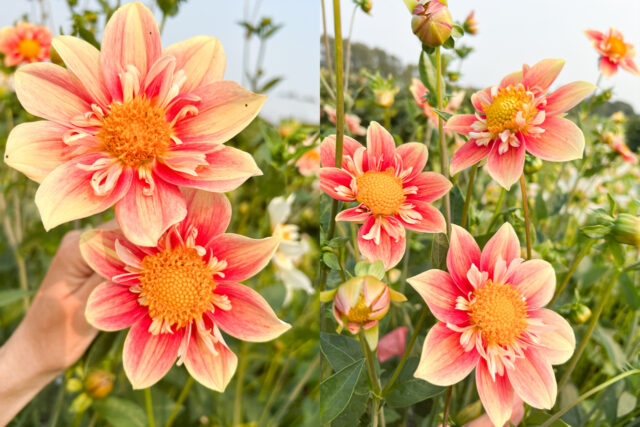
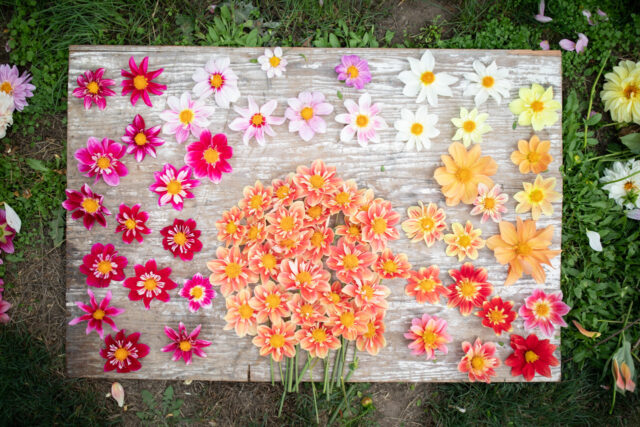 Dahlia F109 (pictured above)
This eye-catching breeding variety reminds me of one of those plastic pinwheels I had as a child. The buttercream-yellow petals have a cherry-red overlay, strangely giving them an orange appearance, and its yellow button centers are encircled in tiny white twizzles.
A large percentage of the offspring were collarette types. So many of them had two-tone coloring or streaked petals like their mother, and there were lots of fun surprises in the mix.
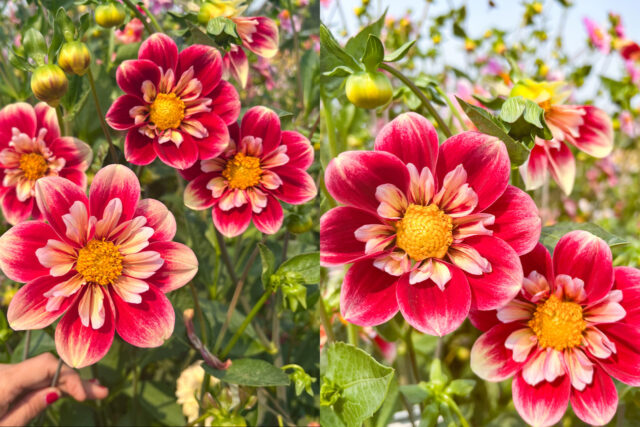
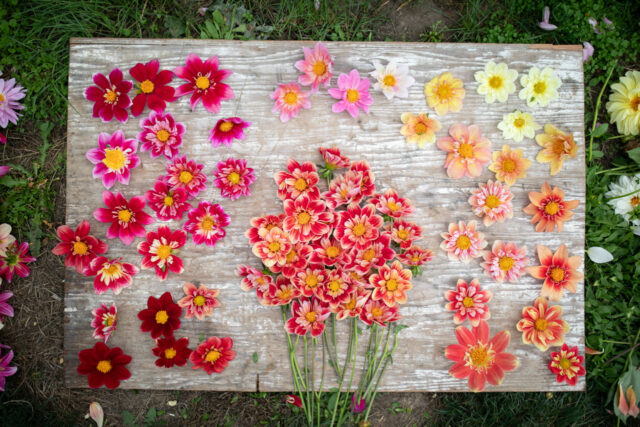 Dahlia F97 (pictured above)
Another breeding beauty, this collarette variety has gorgeous cherry-red, rounded petals that are slightly cupped, with sunbleached peachy tips. Flowers have a yellow center encircled by dense, creamy peach twizzles that look like a ruffled collar.
This variety is a really good seed parent. Most of the offspring were over 6 ft tall, like their mother, and nearly all of them had a collarette form. I found lots of fun color combinations: Most were shades of red or maroon, with a few pastels mixed in.
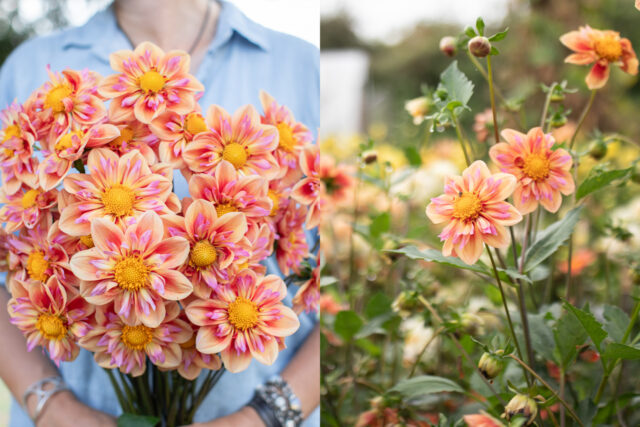
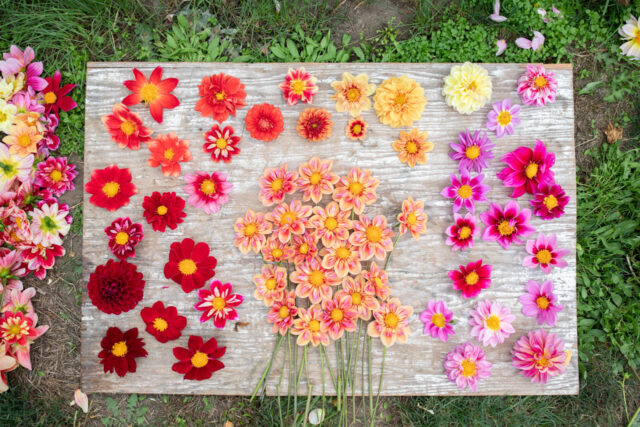 Dahlia ‘Orange Hype’ (pictured above)
This is one of my all-time favorite dahlias! Its soft peachy-orange flowers are borne on long, strong, chocolate-colored stems and are absolutely mesmerizing. The outer petals have a reddish base, and the center is surrounded by long, wavy twizzles tipped in iridescent lavender. The flowers also have an excellent vase life, which is unusual for a collarette.
Most of the seedlings produced tall plants with flowers in striking colors; many were red, maroon, or purple. There were a few collarettes in the mix and a lot of singles—not quite as many keepers as I had hoped.
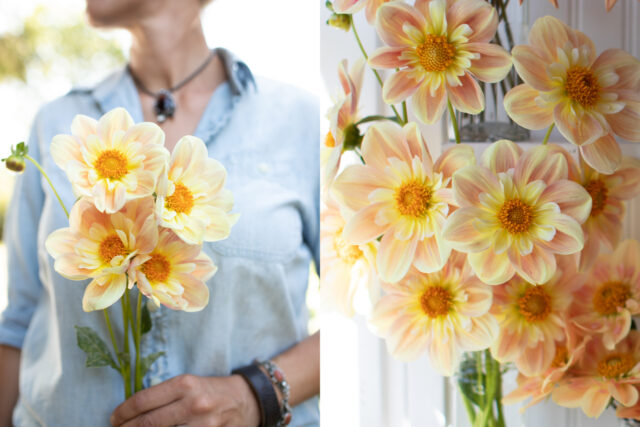
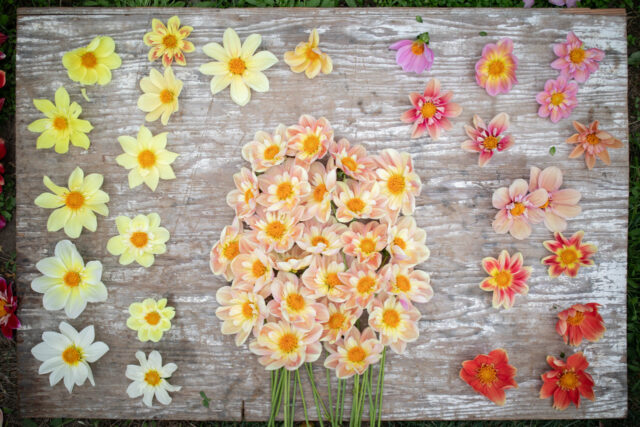 Dahlia ‘April Heather’ (pictured above)
This is another one of my favorite dahlia varieties. ‘April Heather’ cranks out an abundance of long-stemmed blooms that are the most beautiful peachy golden buff. Its unusual, neutral-toned coloring can go either pink or beige depending on the weather. Flowers are very long lasting and fade out as they age.
While I love this variety so much, as a seed parent, it was a bit disappointing. Most of the offspring held the collarette form, but few had their mother’s beautiful coloring. The vast majority of the flowers were yellow or a dingy peach.
 As I continue to grow out more seedling varieties and document my findings, I’ll be sure to share what I learn.
If you’d like to learn more about our dahlia breeding program, check out this Dahlia Breeding Update blog post. And if you’d like to see the results of our collarette dahlia trial, and the varieties that rose to the top, be sure to read An Ode to Collarettes.
Please note: If your comment doesn’t show up right away, sit tight; we have a spam filter that requires us to approve comments before they are published.

Penny Smith on
These posts give me such joy. So much variety in the children and so many gorgeous forms and colour. I would struggle to choose the keepers. Thanks