FAVORITE COLLARETTE DAHLIAS
LEARN HOW TO START FLOWERS FROM SEED
Home Blog An Ode to Collarettes
January 26th 2026

An Ode to Collarettes

Written by
Floret

I’ve been growing dahlias for nearly 20 years now. In that time, I’ve trialed more than 1,500 unique varieties, and I even wrote a book about them.

Back when we were growing cut flowers, I focused on varieties that held up well during transport and had the longest vase life for customers. For our grocery accounts, we grew primarily ball varieties, and for our florist customers, we offered a handful of dinner plates in pastel tones, a beautiful range of formal decorative types, and tiny pompons for incorporating into hand-tied bouquets. 
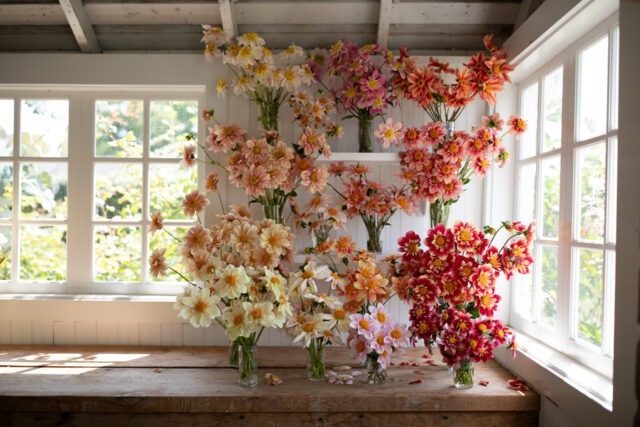
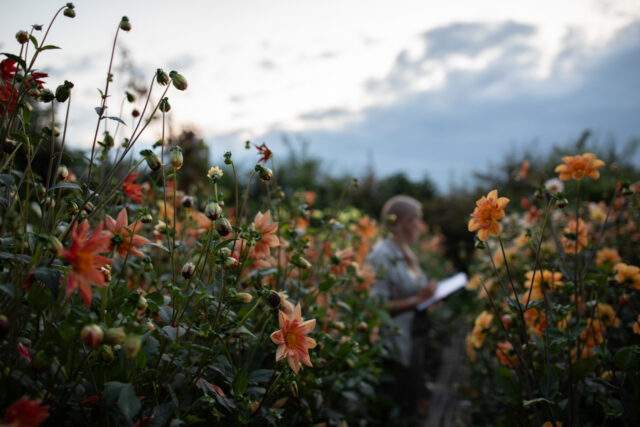
Over time, as the focus of the farm has transitioned from cut flower production to seed growing and flower breeding, I’ve shifted my focus to developing unusual, novelty types and flower forms that have an open center. Some of my favorites are pictured above. 

The vast majority of the dahlias that we grow now are part of our breeding program, and a large percentage of those fall into the collarette and anemone classes. These two flower forms have exquisitely beautiful blooms but are notoriously short-lived as cut flowers, so I’ve been focusing my energy on breeding varieties that have an improved vase life. 
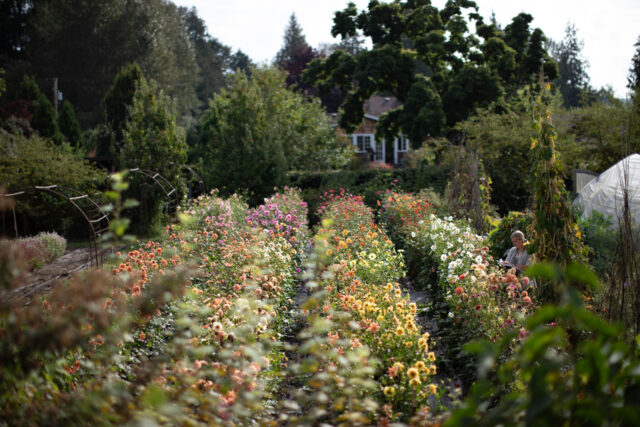
This past season, to see what was on the market, I decided to conduct a huge variety trial of all of the named collarette cultivars that I could get my hands on. I wanted to know whether the varieties I’ve been working on are either an improvement over what already exists or at least as good as the tried-and-true workhorses that we all love.
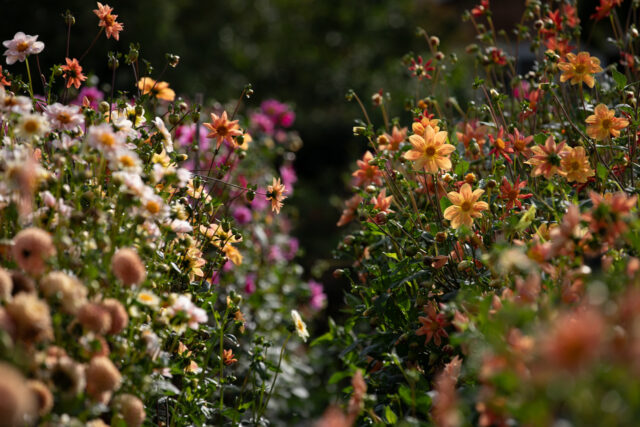
In total, I grew more than 80 named collarette varieties sourced from more than 25 different farms, and I had so much fun getting to see what’s out there.

You can find all of the varieties from this big trial in the Floret Library and below I’ve highlighted my very favorites.
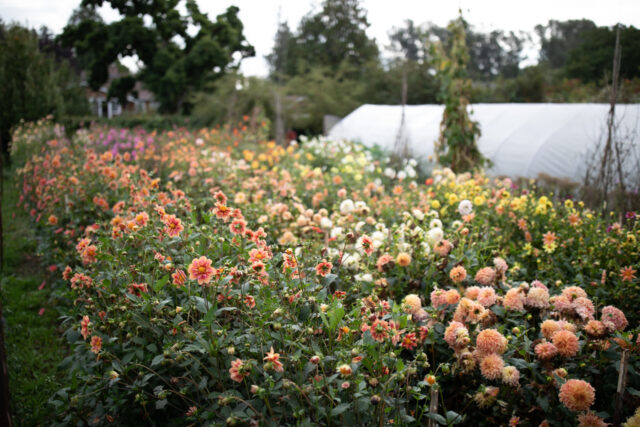
A huge thank you to all of the farms and growers who helped me pull together this incredible selection. And an extra special thank you to Dr. Panat Cherdchu, who called in all kinds of favors to source some really rare, unicorn varieties that took this project to the next level.
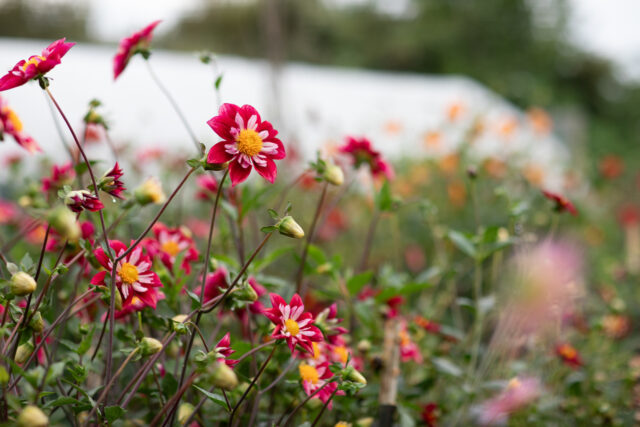
Collarette varieties are defined as having a single bloom form with a collar of ruffled petals, in varying lengths, that encircles their glowing, button centers. Some of the inner petals are short and dense, while others are long and wavy and resemble feathers or ribbons. They have so much personality—it’s almost like their little faces are looking at you in the garden.
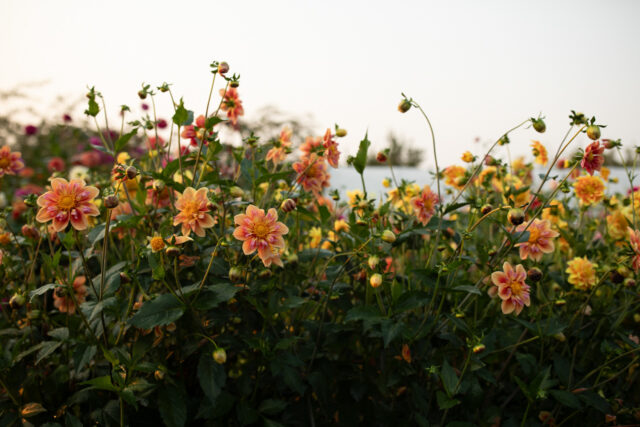
Collarette dahlias have so many qualities that make them special. One is how well behaved the plants are compared to most other types of dahlias: Many collarettes have an airy, branching plant habit, so they don’t require as much staking as varieties with fuller, heavier flower heads.

They are also “self-cleaning”—as their flowers fade, their petals drop to the ground rather than wilting and rotting on the stem, so even if you fall behind on picking or deadheading, the plants always look fresh and tidy. 
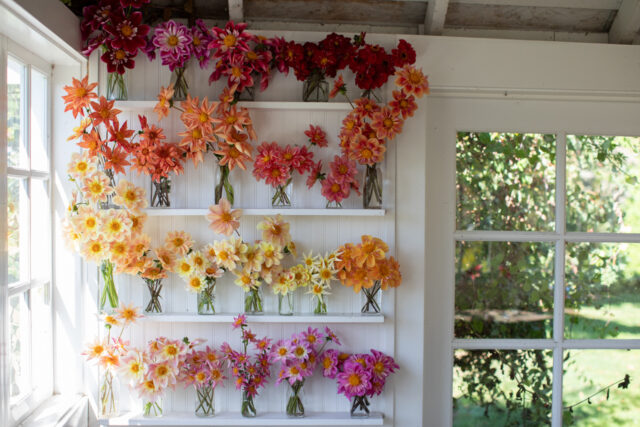
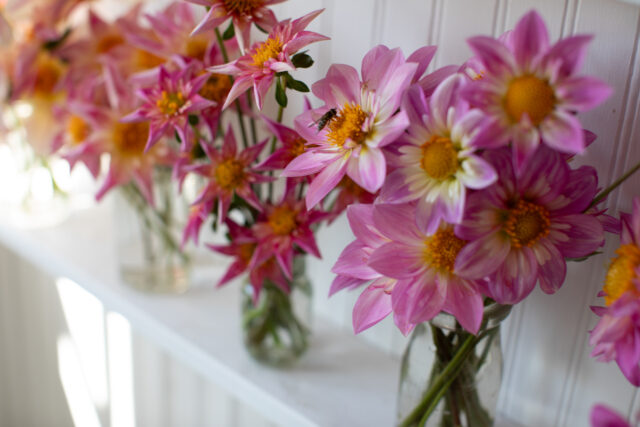
Bunches of collarette dahlia blooms arranged on shelves in the Studio at Floret.

Because of their open centers, most of the blooms have a carefree, wildflower-like quality that I love to incorporate in arrangements. And although many collarettes have a shorter-than-normal vase life, a number of varieties do hold their petals well.

But the very best quality that collarettes possess is that the pollinators really love them, especially the bumblebees. The trial patch was humming with so much life all summer long that you could hear the bees at work from outside the garden.
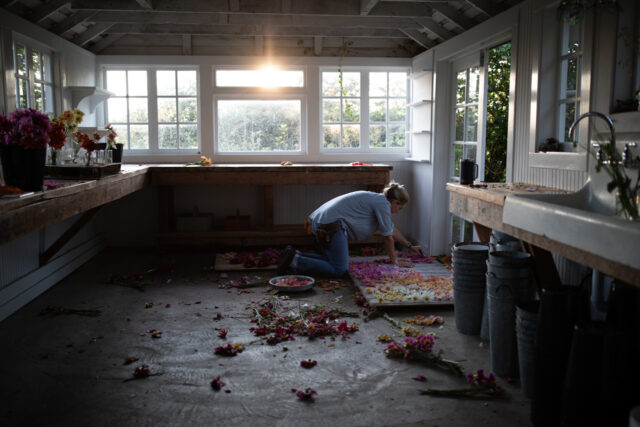
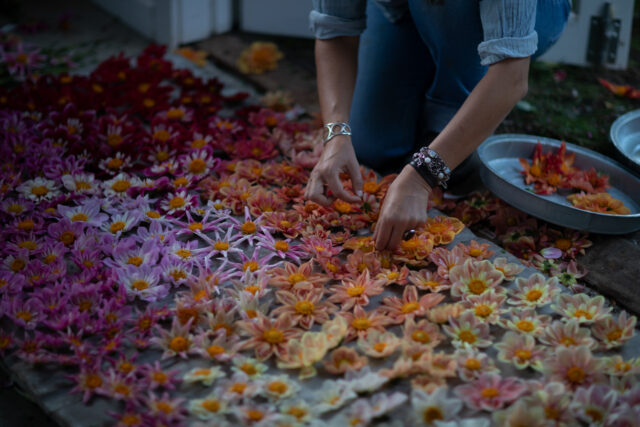
Erin Benzakein creating a flatlay with collarette dahlia blooms in the Studio at Floret.Close up of Erin Benzakein creating a flatlay with collarette and orchette dahlia blooms.

Since I’m so visual, I wanted to compare all of the similar-colored flowers with each other, so after we photographed each one, I cut off all their heads and arranged them side by side.
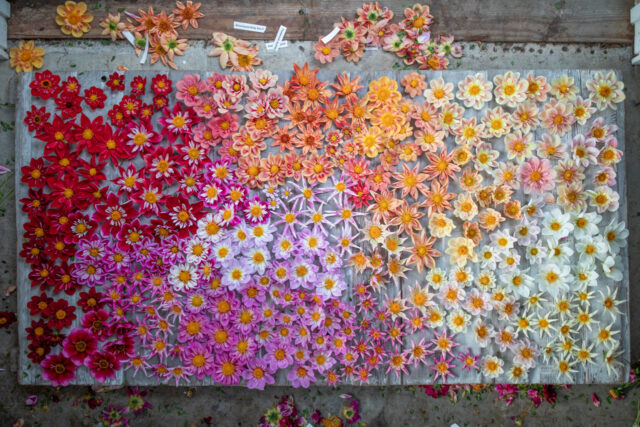
All of the varieties nested pretty neatly into three main color categories: warm coral, orange, and peach; pink, blush, and white; and red, burgundy, and purple.

It was late in the day when we shot the variety overheads and I accidentally mixed up a few of the labels, so ignore the names in the photo and reference the list below each image for accurate identification. 
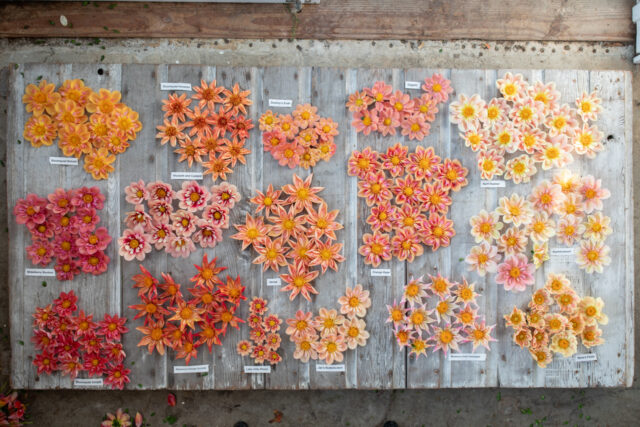
Top row: ‘Bloomquist Behold’, ‘Bloomquist Hummer’, ‘Destiny’s Evah’, ‘GG Petals’, ‘April Heather’

Middle row: ‘Strawberry Bon Bon’, ‘Rhubarb and Custard’, ‘Venus’, ‘Orange Hype’, ‘Appleblossom’

Bottom row: ‘Bloomquist Simple’, ‘Mayberry’s Orange Orchette’, ‘Lake Hills Phred’, ‘Jacs Butterscotch’, ‘Mayberry’s Pink Champagne’, ‘Nana’s Petals’
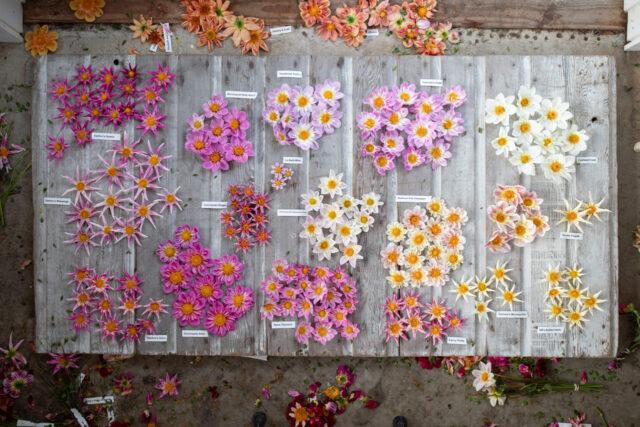
Top row: ‘RaeAnn’s Gemini’, ‘Bloomquist KellyAnn F’, ‘Teesbrooke Audrey’, ‘Carleigh’s Cutie’, ‘Fairfield Frost’

Middle row: ‘Destiny’s Blessings’, ‘Bloomquist Ginger’, ‘Lo-Spilt Wine’, mystery (needs ID), ‘Mayberry’s Peach Blossom’, ‘Ferncliff Dolly’, ‘Honka Fragile’

Bottom row: ‘RaeAnn’s Orion’, ‘Bloomquist Arise’, ‘Alpen Diamond’, ‘Fancy Pants’, ‘Verrone’s Morning Star’, ‘SB’s Buttercream’
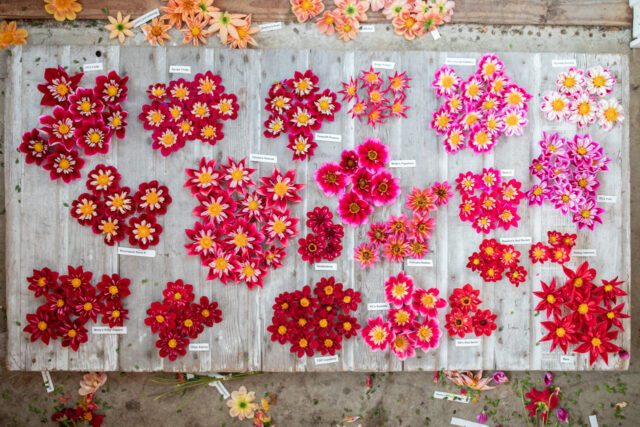
Top row: ‘PC’s Cody’, ‘Apopa Cindy’, ‘Ferncliff Picasso’, ‘SB’s Red Baron’, ‘Bloomquist Catalina’, ‘Bumble Rumble’

Middle row: ‘Bloomquist Steve R’, ‘Thicket’s Rescue’, ‘Hootenanny’, ‘Molly’s Paparazzi’, ‘Princess Nadine’, ‘Sean C’, ‘RaeAnn’s Red Rocket’, ‘Kelsey Valentine’, ‘PC’s Yuth’

Bottom row: ‘Molly’s Ruby Slippers’, ‘Dilys Ayling’, ‘CDP Cranberry’, ‘PC’s Sumetta’, ‘Angel Rowyn’, ‘Mars’
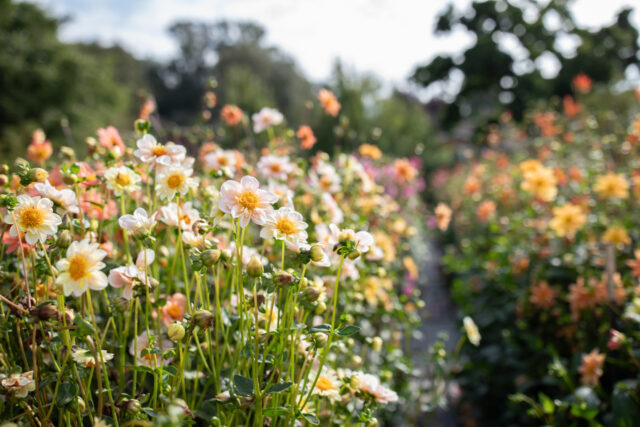
While all of the varieties that I trialed were beautiful, there were a handful of real standouts that made it onto my favorites list and now have a permanent home here on the farm. I thought I’d share my favorite newcomers, along with some of the old faithfuls, in case you’re looking for some exceptional additions to your own garden.
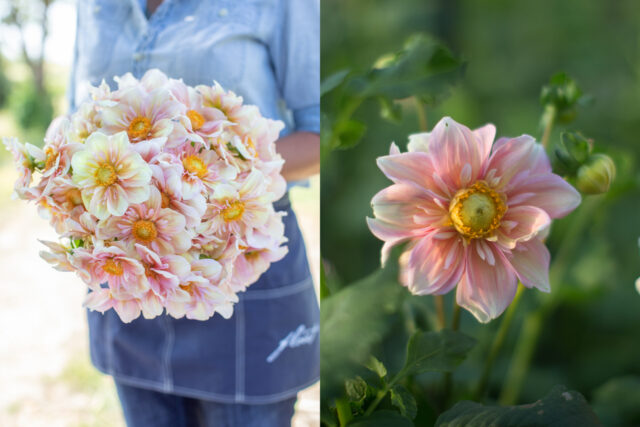
‘Appleblossom’

The first collarette variety that I ever grew, it was ‘Appleblossom’ that made me fall in love with this beautiful class of dahlias. It was one of the most popular varieties we grew, both for cut flowers and when we sold tubers, and it was impossible to keep it in stock throughout the season. The delicate-looking flowers last surprisingly well in the vase. Petals start out a soft buttercream and take on a subtle blush wash as they age. Bumblebees absolutely love this variety and it has held a top spot here on the farm since the beginning. 
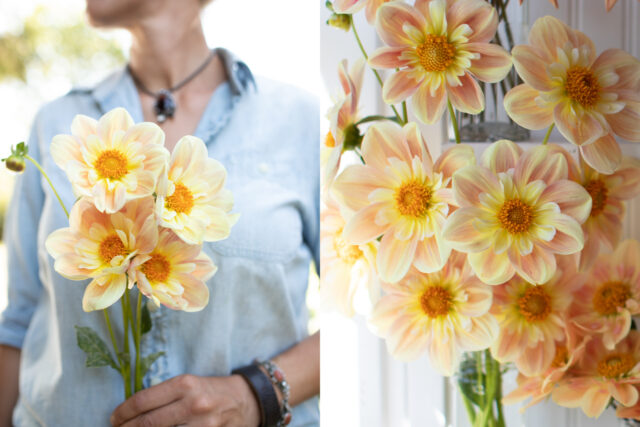
‘April Heather’

This old standby has long been one of my favorite dahlia varieties. ‘April Heather’ cranks out an abundance of long-stemmed blooms that are the most beautiful peachy golden-buff. Plants have a very airy, branching habit and look wonderful displayed in a mixed border or grown in long, straight rows. Its unusual, neutral-toned coloring can go either pink or beige, depending on the weather. Flowers are very long lasting and fade out as they age.
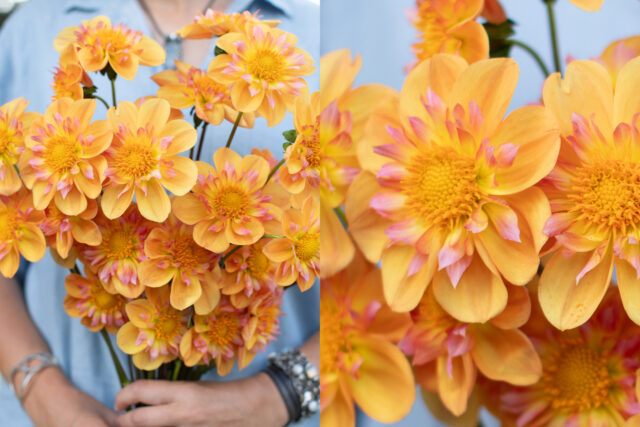
‘Bloomquist Behold’

This was one of the brightest-colored varieties in the trial, and I was so surprised by how much I loved it. Plants are tall but well behaved, and they produce an abundance of blooms on long, thick chocolate stems all season long. Flowers are a glowing tangerine and have a dense layer of iridescent, pink-tipped twizzles. Blooms last well in the vase, and their fresh, vibrant color is perfect for summer. 
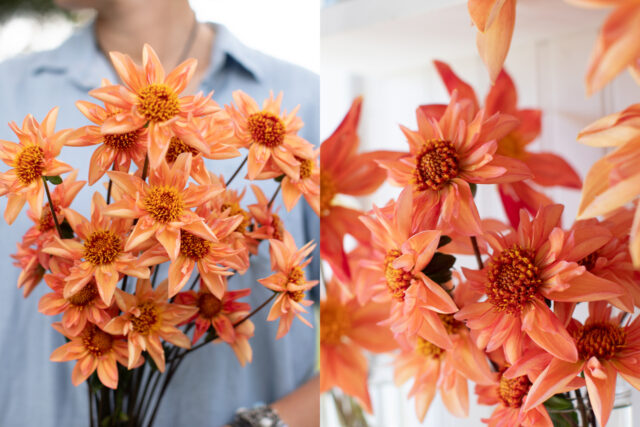
‘Bloomquist Hummer’

This is an unfortunate name for such a great variety! The towering plants get almost 6 ft tall by late summer and have a sprawling, branching habit. The long, strong, chocolate-colored stems are loaded with the most unusual-looking flowers. Blooms have rich, coral-orange petals that roll inward, giving the tips a pointed appearance. Each flower has a ring of matching orange twizzles that encircle a fuzzy, reddish-brown center. It’s incredibly unique. Although I loved it in the garden, I didn’t cut many flowers this season so I can’t report on the vase life just yet. 
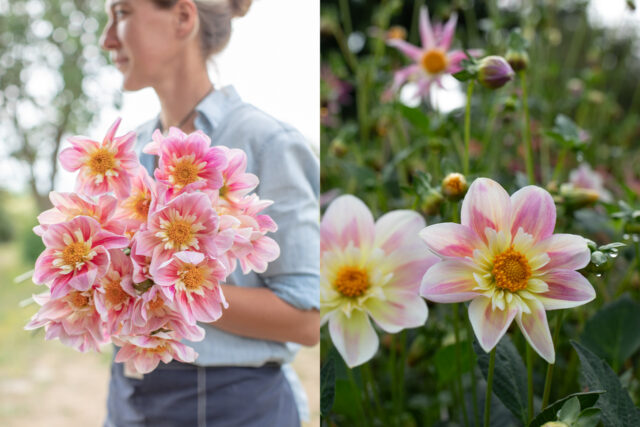
‘Ferncliff Dolly’

I don’t know if I’ve ever grown a sweeter dahlia. There is just something so special about this beauty, and I can never have enough of her. Plants are well behaved, growing between 4 and 5 ft tall, and have an airy, branching habit. The long, strong stems are topped with large, pretty pink flowers tipped in soft blush. A ring of smaller, creamy inner petals encircles a glowing golden center. In addition to being beautiful, she’s a really long-lasting cut and ages beautifully, both in the vase and in the garden. 
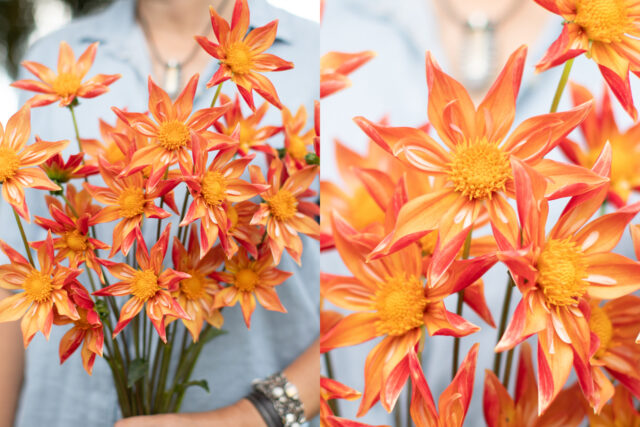
Left: A handful of Dahlia ‘Mayberry's Orange Orchette’; Right: A close up of Dahlia ‘Mayberry's Orange Orchette’.‘Mayberry’s Orange Orchette’

These absolutely massive plants were over 7 ft tall by the end of the growing season but were surprisingly sturdy for their size. Each long, strong, branching stem holds large, outward-facing, star-shaped coral-orange blooms with rolled petals. Flowers also have long, white, ribbon-like twizzles encircling their button centers. These beautiful monsters last very well in the vase. 
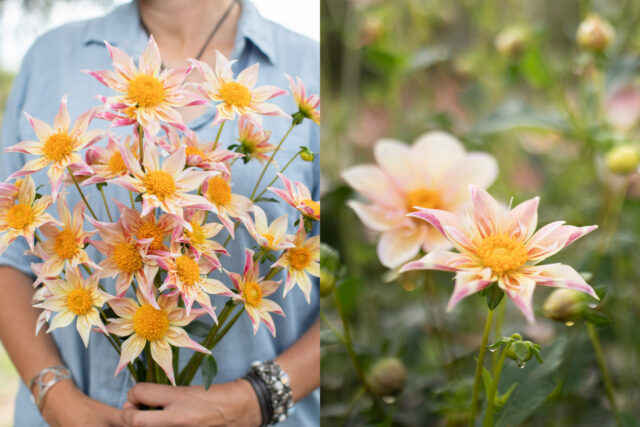
‘Mayberry’s Pink Champagne’

Another gem from Mayberry’s breeding program, these plants top out at 6 ft and produce a bumper crop of the most beautiful, long-stemmed flowers. Flowers are the prettiest soft buttercream with a rosy haze and pinked petal backs. Their large, upward-facing blooms have rolled, pointed petal tips. A ring of short, white twizzles encircles the dense, fuzzy, yellow centers. They also hold up great in the vase, lasting just over 5 days. A new favorite!
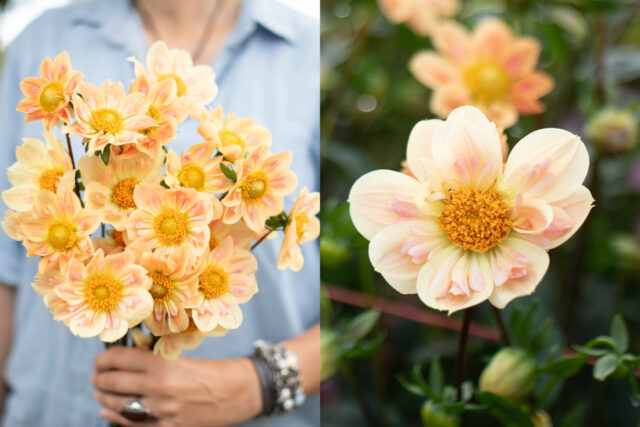
‘Nana’s Petals’

I hunted for this elusive variety for 3 years before finally snagging it. I had really high hopes for this one—and it surpassed all of them! Plants have rich, dark green foliage and are surprisingly well behaved, topping out at about 4 ft by season’s end. The dense, bushy plants are smothered with the prettiest upward-facing, soft buttercream blooms with a thick peach stripe down the center of each petal. Each flower has a double layer of thick, peach-kissed twizzles encircling a bright orange-yellow center. Although the flowers look quite delicate, they last surprisingly well in the vase. ‘Nana’s Petals’ was worth the wait and is now a top favorite. 
‘Orange Hype’

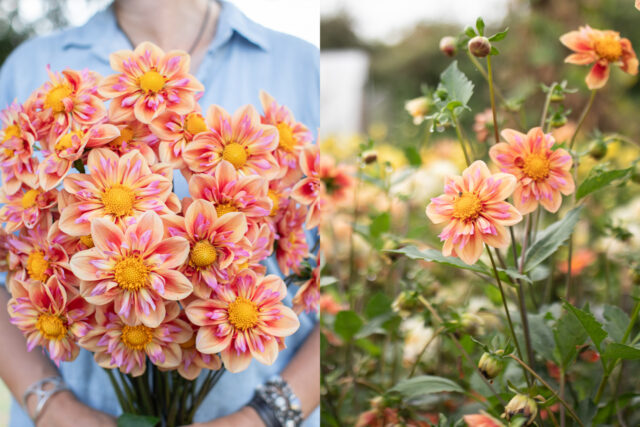
I discovered this treasure a few seasons back and it has quickly become a favorite. Plants get quite large, between 5 and 6 ft tall, and are loaded with an endless supply of flowers that ride atop dark chocolate stems. The outer petals are a soft peachy-orange with a reddish base, and a ring of long, wavy twizzles tipped in iridescent lavender surrounds the golden center. The color combination is mesmerizing and it’s hard to believe they’re real. These beautiful blooms also have an excellent vase life and are one of my favorites to arrange with. A must-grow! 
‘Rhubarb and Custard’

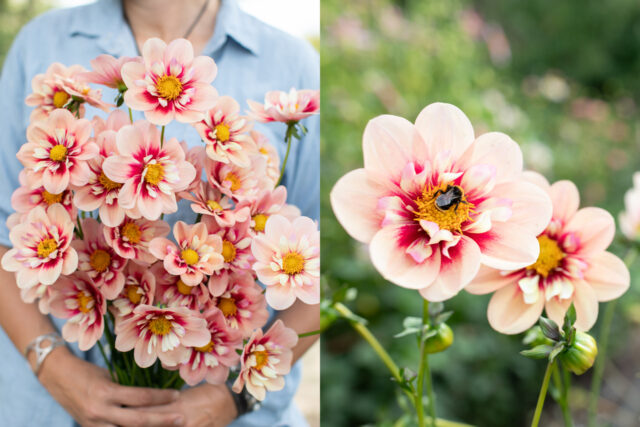
This is one of the most sought-after varieties on the market right now, and for good reason. ‘Rhubarb and Custard’, bred by Dr. Keith Hammett in New Zealand, is one of the most prolific bloomers I’ve ever grown. The well-behaved plants top out at 4 ft tall and put out an endless parade of blooms all season long. Flowers have soft apricot outer petals with a rhubarb-red ring around the center and creamy custard twizzles with lavender tips. The color combination is like nothing else I’ve seen, and they are a flower arranger’s dream. Despite their delicate appearance, blooms are tough and last very well in the vase. It’s also a favorite with pollinators.  
‘Thicket’s Rescue’

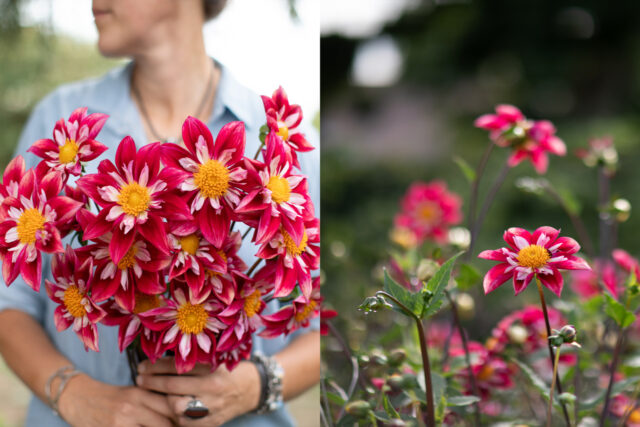
This variety is now in my top 5 favorites of all time. Bred by 10-year-old twins with the help of their mom, I think this gem is going to become the next big thing. You can read about how it was discovered here. The towering, 6-ft-tall plants have dark green foliage and long chocolate stems that are topped with huge, smoky raspberry-red blooms with pointed petal tips that fade as they age. Each flower has a striking ring of white twizzles kissed with cranberry. The flowers are very long lasting when cut and it is a favorite with the pollinators. 
‘Venus’

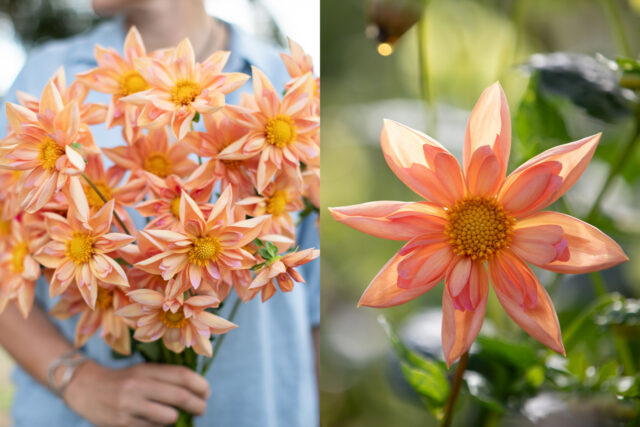
It took me years to find this highly coveted variety, and it was such a treat to finally get a chance to grow it. Plants are bushy and lush and get between 4 and 5 ft tall. Soft peachy-orange outer petals are pointed and roll slightly inward, giving flowers a star-like appearance. A ring of long, matching twizzles is tucked inside each petal, giving blooms a unique textural quality. One of the most interesting surprises was that a few yellow sports popped up in the row—they had the exact same plant habit and flower form, but were highlighter yellow. The one downfall of ‘Venus’ is that it doesn’t hold well in the vase, but it’s still one of the coolest dahlias I’ve ever grown. 
You can find all of the varieties from the trial over in the Floret Library. And for a list of all of the sources that I ordered tubers from, be sure to read our Recommended Dahlia Sources blog post. 

I hope this post has inspired you to consider adding some of these beautiful, pollinator-friendly flowers to your garden. If you know of a collarette variety that I haven’t yet grown, please let me know! 


Please note: If your comment doesn’t show up right away, sit tight; we have a spam filter that requires us to approve comments before they are published.

Floret only lists companies and products that we love, use, and recommend. All opinions expressed here are our own and Floret does not offer sponsored content or accept money for editorial reviews. If you buy something using the retail links in this post, Floret may receive a small commission. Thank you for your support!
58 Comments

  1. Kathy McBride on

    Beautiful flowers! I enjoy the collarette type, however don’t pick them much anymore because they fall apart in the few hours I have them sitting before I arrange. Can you tell me at what stage to pick them? I have been picking at fully open. Wonderful information and I appreciate all the work you and the team have done documenting! Thank you!

    Reply
  2. deb on

    wow! So want more of these in my garden. Great work!

    Reply
  3. Joey Babay on

    I am also on the Collarette band wagon this coming summer thanks to your encouragement. A small city plot and satrting with only 12 but anxious to share my little beehive with the neighbors here in Minneapolis.

    Reply
  4. Alli Stilwell on

    Erin,

    Your collarette dahlias are beyond beautiful and I have had a few pop up from seeds I grew from your dahlia seed sales. So much thanks to you, Jill, Nikki and Eric and of course Chris for giving us inspiration for 2026 and beyond. We can’t tell you how much goodness and kindness you put into the world and how appreciated it is! You inspired me to leave the grueling Tech Industry and to start teaching flower design classes as a way to amplify community, connection and the love of nature. If you want to see the tendrils of all you have done to inspire me and now a blossoming community, check us out at https://www.instagram.com/protea.farm Sincere thanks and happy 2026 to you and this community!

    Reply
  5. Patricia on

    Thank you so much for this post! Collorettes are my favorite and getting more difficult to find! Will check out your resources guide! I’m just over the water on the Kitsap Peninsula.

    Reply
  6. Kathleen & Hollywood 🐶 on

    When I started my first garden I went crazy over popular big blooms not realizing the bees would uncontently struggle searching for the gold. Out of my original Bee’s Choice seeds we managed to save two collarette style flowers when other tubers fainted. I’ve since paid attention to what I wish to grow for the pollinators. Collarettes! We just want to bring color & beauty into our yard for wildlife. My last two years my Apple Blossom tubers never grew. I hope I can strike a golden egg this year but I am starting new seeds as well Mahalo for sharing your rainbow with us! 🪱🌱🐦

    Reply
  7. Karan Wadsley on

    Hello, Thank you for the results and the gorgeous photo’s, they all look fantastic. I have turned into a bit of a Dahlia nut, since I am lucky enough to help out at a Victorian walled kitchen garden for the last 14 years, (some weekends only, I have a full time office job) and the garden is full of them. So, I seem to get a bit obsessed when the dahlia tubers come on sale in February and buy way too many of all varieties! Last year I did buy a collarette called ‘Liquid Desire’ (no sure if you have it in the USA) and after your inspiration on saving seed, that what I have done. This year I plan to sow that seed and see what happens, and I have also been lucky to purchase a packet of Floret dahlia seeds ‘Bees Choice’ from Milli & Paris Alma/Proust website when they were on sale, here in the UK, I think it was 2023, but due to personal circumstances, I missed the window of sowing these, so hoping to try this year and looking forward to the mix of flowers when they bloom and I have a passion for wild bees to thrive. Happy growing 2026 to you all :)

    Reply
  8. Kim on

    Wow wow wow! Can’t wait to add these beautiful babies to my outside world to enjoy but help the bees!!!

    Reply
  9. Lynne m on

    Love collarettes, we don’t use them for flower arranging at all. We have bee hives and bumblebee nests in our yard along with a bird sanctuary and mason bee homes. We just want to have our own little nature garden to enjoy.

    Reply
  10. Shoshana on

    From your comment on Bloomquist Hummer’s name I assume it makes you think of the car. I thought it meant a hummingbird! 😆 I really hope Orange Hype and the rest of Sophie Jones’ varieties become more available in the States soon. I’ve been waiting!

    Reply
  11. Tasha Hussey on

    This is amazing work Erin. I love the Collarette series they have the most character. Thanks for all the information shared in your library on the growing differences, production, and vase life. This will be my first year growing dahlias and I am starting off from seeds. Loving Module 3 in the workshop. Tasha from Georgia.

    Reply
  12. Colleen on

    Collarettes are some of my favorite. They are also fun to grow from seed to see what you will get! I managed to save seeds from Kelsey Annie Joy and will be planting some this Spring! Love the photos!

    Reply
  13. Jamie Milne on

    Bloomquist Whimsical! Reading your wonderful collarette article made me realize that some of my 40 varieties of dahlias I had considered collarettes were actually Single Form (?). However, I’m pretty sure Bloomquist Whimsical is a gorgeous collarette and one of my favorites.

    Reply
  14. Paula Schuh-Tegge on

    WOW!!! Awesome information, and beyond words for all the flowers, so lovely! Can’t wait for my seeds to arrive and watch the magic unfold , thank you so much for all the information. there is a lot of hard work there ….Paula , Cinti., OH

    Reply
  15. Lorrin on

    Love all the information shared! And as always, lovely pictures. Will you be finding ways to share your trial results? This article was certainly a beautiful ode to the collarette, but I was sad to see less in the form of trial results than the button in the newsletter email suggested. 💕 Next time!

    Reply
  16. Dana Plummer on

    Oh these are all so lovely! I would love to know if seeds will be available at some point to purchase?Thank you so much

    Reply
  17. Maggie on

    I want to thank you for all your hard work and knowledge that you share. This blog made me so happy. Reading your descriptions about your flowers is like reading a love story. You can tell how much awe and love you have for each individual flower. It makes me so excited to try growing dahlias this year for the first time ever. I am reading everything I can and watching all the videos to learn how to grow! Thank you!

    Reply
  18. Annette Bowen on

    As always, thank you for your studies and marvelous photos plus information you compile and share. Your team is the best!
    Annette down the road

    Reply
  19. Don C on

    In appreciate all the hard work you put into collecting, growing ,harvesting and ,as important your writing about it. Thank you for the creative manner in which you presented this blog.

    Reply
  20. Carina Paredes on

    I’m breeding collarettes and I’ve got a few really unusual ones that will get released this year or next year. One is like Rhubarb and Custard meets Ferncliff Dolly. The colors on that one are out of this world.

    Reply
  21. Donna on

    I’ve grown several of these types over the years and I adore them. They are just the sweetest flowers. I do wish they had more vase life.

    Reply
  22. SUZ on

    swooning……..WOW……..YES! to more Collarette tuber sales!

    Reply
  23. Julia Mohr on

    I love this form of dahlia but whenever I have grown it among the other forms (ID, FD, ball…) the seeds I collect from the “other” forms will always produce more collarettes. How far away should a bed of collarettes be away from the other beds to limit the pollinators influence on the seed pods?? Love all your blogs and sharing you provide it has taken my knowledge and gardening to another level. Keeping flourishing!

    Reply
  24. Karen on

    I shied away from collarettes after my first year of growing because of the vase life. I thought I would try again a couple of years ago though and they’re now some of my favorites as well. I stopped caring about them so much for vase life and grow them now for the joy it brings me to see how much the bees love them. I might get one or two bees hanging on my other dahlias but I’ll have a swarm of 15 on a collarette/anemone. Sunshine in a flower for me is Sandia Summertime or Platinum Blond. Very similar and both great growers.

    Reply
  25. Teri on

    My very first dahlia was a collarette given to me by my sister. So I understand your love for them. I have 3 that I save tubers from each year but my absolute favorite is one that I kept from your “bee’s choice” seeds. It is a lavender color with deep red and the bees love it. I plant one in each of my boxes to bring the bees. My granddaughter named it “Lilac plumb”.Thank you for these lovely new ones. I will be adding a few to my garden!

    Reply
  26. Jessica on

    Looks like I have to find Orange Hype this season!

    Reply
  27. Kay Stoecklin on

    I’ve been hooked for years on collarettes since Appleblossom! Hunting everywhere! You read my mind, you have mental telepathy! I appreciate how much hard work this labor of love was. Now I can’t wait to see where this all goes. Cheers to Floret again! Thank you again! I love you all!

    Reply
  28. Jessica L Therrien on

    I have secured 3 tubers of rhubarb and custard because my heart just lit up with joy when you talked about it earlier in the year!

    Reply
  29. Joann on

    Erin, thank you once again for sharing! With your books, blog, and newsletter, my little garden is getting filled with dahlias and zinnias. I try to remember to include other plants and flowers, but there’s something about them that just makes my heart so happy! Maybe it is the beauty of them and the buzzing of the content pollinators…

    Reply
  30. Michelle on

    My first ever successfully rooted cutting is from Rhubarb and Custard! Seemingly an unlikely place to start, but I helped my flower farmer friend wash her tubers in fall as she dug them. Her Rhubarb and Custard tuber clump only had three tubers, one skinny as a pencil and the other two not much better. She said it probably wouldn’t store well and she wouldn’t have time to do cuttings herself, so as long as I promised to give her a cutting, she’d give me the tuber clump. She gave me tips along the way, and I am now happy to report that as of about a week ago, I had my first rooted cutting! If I have multiple to sell by the end of the winter, I worry that no one will believe me that they are actually true to type since they are so rare!

    Reply
  31. Katy on

    As always…inspiring and joyful work. I love the names and descriptions. Not only are you extremely knowledgeable and have changed the world, yes the whole world (ripple effect you know) but you are truly an artist of the highest caliber! Thank you so much for sharing your world and your work and your team.

    Katy

    Reply
  32. Flower Friend on

    Thank you for sharing. They are just so beautiful. The nana is my favorite.

    Reply
  33. Angie High on

    Appleblossom is the very first collarette I saw- being introduced to her through your “Cut Flower Garden” book. I must say she is a beauty. I’ve only ever had about one tuber of her and just finally learned better dahlia storage so hopefully this year I will have more- as I have learned more about taking cuttings from dahlias for propagation this year I hope to have a bunch! Thanks for the great article!

    Reply
  34. DeeAnn on

    I love the collarette dahlias for their pollinator attraction! After looking at your list of dahlia sources, I found RaeAnn’s Tigers Eye from Lobaugh. It fits my not too high, bees like them, orangey yellow color profile. You have inspired me to try seeds, too! I purchased a package of collarette seeds…I will make more space in my garden to trial them. Thank you, Erin, for inspiring me to try new flower things!

    I also attempted to collect seeds from my fave dark orange dahlia after watching your seed saving video. I might have been too late in the season. If no success with what I harvested, I will leave flowers to mature earlier this year!

    Reply
  35. barb on

    As always, you and Chris have outdone yourselves. I’m in MI – we’re in the middle of an artic air blizzard with lake effect snow – so this slice of summer heaven is refreshing. I’m making a list and need to watch my budget so I truly appreciate your reseach and list of your favs. I suspect with your endorsement, they might be hard to score but that’s ok – after 30+ years of gardening with the last 5 being very active, I can be patient and wait. Love you all to the moon and back.

    Reply
  36. Melanie on

    This winter I am reworking and giving a major overhaul to my tired, overwintered dahlia beds (zone 8b) and this is just the inspiration I need to keep this (for me) big project moving forward. Thank you!!

    Reply
  37. Trish on

    Love this research. Thank you!

    Reply
  38. Lilia on

    I am thoroughly blown away by all your research, effort, perseverance and the wonderful results from all the years you’ve dedicated to using what’s been afforded this planet to produce. Thank you for showing us what good stewardship looks like in the botanical world.

    Reply
  39. Cyndi Tippett on

    I love them all and recognize a couple flowers from the seeds I ordered from you three years ago. The seed I saved and planted out last year gave me more beauties. I don’t know if I got any surprises but I love them. I am adding two new larger flower beds to my yard to accommodate my new obsession…dahlias. Thank you for the eye candy on this frigid January day. Looking forward to starting my “Floret seed babies”. All because of you…

    Reply
  40. Diane McElwain on

    GLORIOUS! I bought your book and enjoy the colors. Flowers make me so happy!

    Reply
  41. Morena on

    This is so beautiful. Thanks for sharing!
    This past year was my first year growing collarettes and I loved them. I love the subtle growth, the delicate, airy movement/shape of the plants when blooming. I think they are perfect to fill any empty space in the garden beds. Such a happy and friendly flowering plants.
    I grew a few of your favorites and I have them as well, well planted in my heart now. Bloomquist Simple, Rhubarb & Custard, Ferncliff Dolly and April Heather, loved them all. Sadly Venus and Thicket’s Rescue got virus and I had to pull them out. And Bloomquist Behold didn’t performed that well for me. When harvested about a day before they were fully open, they had a good vase life, and getting to see them opening inside was quite a treat. They are beautiful. And they provide abundance in many ways. I was able to harvest seeds from many. It’s going to be excited to see those babies bloom this year.
    I got a tuber of Strawberry Bombom at the end of the year (yay!) and would love to grow Mayberry’s Orange Orchette and try Venus again.
    The picture from your Collarette trial garden from up high is gorgeous. We are so ready for Spring, right?

    Thank you, Erin, for showing us that we can always dream a little bigger, move a little closer to our dreams, and grow, expand, and share all of our gifts.

    Morena,
    from Love and Devotion Florals.

    Reply
  42. Tina Miller on

    The Collerettes are my absolute favorite variety of all the Dahlias! Im so happy that you are focusing on them now! You have so many beautifully colored ones! Can’t wait to add some of them to my gardens!

    Reply
  43. Amanda Myers on

    Thank you for sharing all of your research, Erin! Beautiful pictures and helpful descriptions. I will definitely try to add more to this year’s garden. Like you and others have mentioned, my experience has been losing too many petals before I even get them in to an arrangement. Maybe I’m not picking them early enough? Look forward to planting some new varieties this year, in addition to my Floret originals! Thank you again!

    Reply
  44. Lina on

    Beautiful selection. I’m excited to add to my dahlia collection!

    Reply
  45. Alex on

    I have several of these that I’ve saved from my CanCan Girls from 3 years ago. I planted both tubers and seeds hoping to get a surprise, but they look pretty much the same either way. They are lovely and make a beautiful bouquet mixed with zinnias.

    Reply
  46. Wendy on

    So lovely to see these beauties on this cold and snow filled day. I grew dahlias from seed from your Petite Floret and Shooting Stars and the results were some very beautiful collarettes. I tried saving the tubers, but they all rotted, luckily, I still have some seeds left and I managed to save some seeds from the plants. So excited to see what happens.

    Reply
  47. Melissa Wood on

    Okay, I love every single one of these varieties! Guess I need to get more tubers! LOL! Thank you so much for all the incredible information you present! I’ve learned so much from you and your team over the years!

    Reply
  48. Anne on

    Perhaps Bloomquist Hummer is named because it is a favorite of hummingbirds. I don’t think we should assume that such a reputable breeder would select an unfortunate name.

    Reply
  49. Natalie on

    Similar to the previous post. I am moving to southern Nevada and am curious if I could grow these in pots. I have always lived in zones 4 or 5 and love dahlias, so I am hoping there is a way

    Reply
  50. Casey on

    I’m near Charleston, SC zone 9a. I moved my dahlias from full sun to afternoon shade because they were super stressed in mid summer. Last year I also started some by seed in late January and had blooms starting in late May. They only got full sun from 9-2 and bloomed very well from June thru late November (we had an early freeze). I leave tubers in the ground and just mulch for winter.

    Casey
    JeremiahFarm.com

    Reply
  51. Victoria on

    I’m very excited to try Bell’s montmartre this season which I don’t see in your trial, but now have added rhubarb and custard thanks to your list!

    Reply
  52. Janet Lancaster on

    I love the look of a collarette dahlia, but have not been able to use them confidently in my bouquet work. Mine tended to drop petals even before I got them from the field to my workspace.
    I grew my very first batch of dahlias from ‘Floret’ seed (Shooting Stars) with great success. I overwintered the tubers, also with great success. Unfortunately, after two seasons I decided to discontinue the collarettes only because I needed the space in my gardens to grow the varieties I could depend on for my bouquets. I did save some tubers from a few that I particularly liked, but would love to know if there are any tricks to longevity once cut. Because I’m an eternal optimist, I did order some more seed for this Spring (Bee’s Choice) to see what I end up with.
    Maybe I just enjoy them where they grow!!

    Reply
  53. Kristen on

    I so admire and appreciate the time and attention to detail you put into all you do. Your love of flowers overflows from you, and I just want to say, “Thank you!” I’ve learned so much from you over the years (including today from all you shared about collarettes!). You’re a trailblazer, and your talents, vision, creativity, and overall love of all things flowers are a gift to me and to this world! Thank you, Erin!

    Reply
  54. L. on

    Thank you for the results❤️

    Reply
  55. Caroline Bridge Armstrong on

    You’ve hooked me with this type of of Dahlia and I’ll try them this year. One of the most important features was the attention they received by the pollinators.
    Thank you for your diligence in bringing these beauties to us.
    Cheers
    Kai

    Reply
  56. Jodie Bass on

    I’d like to buy several of these seed packets once you have them online for sale. However, I live in Palm Beach Gardens, Florida, which is zone nine. Does that mean I can’t plant them till September. It only gets hotter from April through October. It could be high humidity, sunny and in the 80s all day long, would you plant these in someplace that gets eight hours of sun,or more of a spot that gets some shade from the houses for 4 to 5 hours. Please advise. I love your flowers. I have all your books, it never specifically states the Florida growing season so I’m not sure if I want to spend the dollars and not be a successful as the picture shows.
    Any thoughts? Thank you for doing what you do and staying true to who you are. Love your films books and all the things you do to make the world a prettier place.
    Still blooming,
    Jodie
    [email protected]

    (407} 766-9767.

    Reply
  57. megan gladstone garden design on

    This post is so fresh and inspiring… thank you so very much for the inspiration on such a cold day. I’m going to add several of these to my clients cutting
    gardens. best, Megan

    Reply

Leave a Comment

Floret Farm's Small Plot: Big Impact

Small Plot: Big Impact

Inspiring stories, profiles & advice from 45 flower growers from around the world

Stay in the loop with our updates

Close

Join Us

Join the Floret newsletter and stay in the loop on all the exciting happenings here on the farm

Close