
Every year, as the garden starts to slide into autumn and the flowers on the farm become more tattered with each passing week, marigolds start to come into their own and I am reminded why I love them so much. While other plants are winding down, the marigold patch is still vibrant and cheerful and their bright-colored flowers mirror the changing landscape. The blooms are unfazed by stormy fall weather and the foliage continues to look great right up until frost.
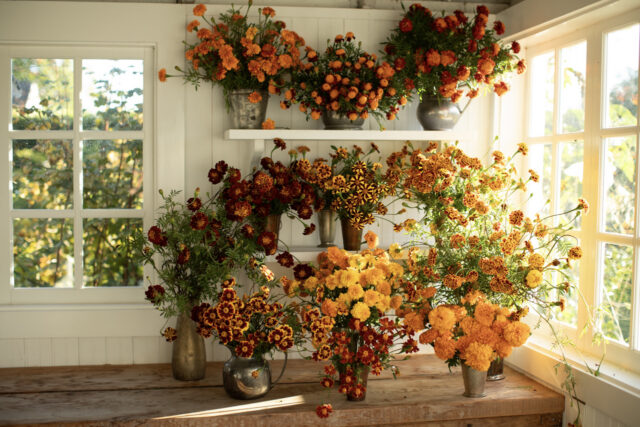
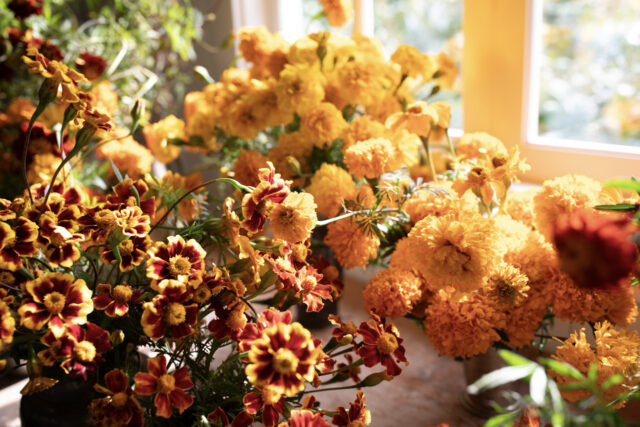 Marigolds are some of the toughest, most abundant-flowering plants you can grow. This diverse group includes a wide range of both plant and bloom sizes, from smaller, compact plants that are perfect for pots to towering varieties that are shoulder high by season’s end. Some produce flowers that are the size of pennies, while others can be as large as the palm of your hand.
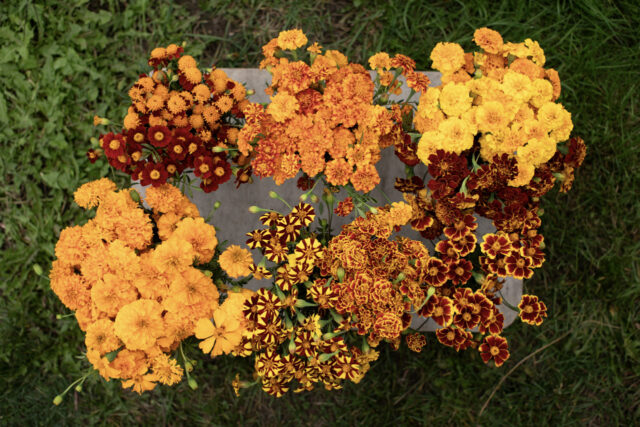 They thrive with very little care, love the heat, and produce flowers in abundance from midsummer through the bitter end of the season. Their vivid blooms, which include many shades of yellow, gold, orange, and red, make excellent natural dyes, and some are even edible.
Because the flowers are so sturdy, they also make wonderful materials for garlands and leis. Marigold foliage also has an unforgettable fragrance that people either love or hate.
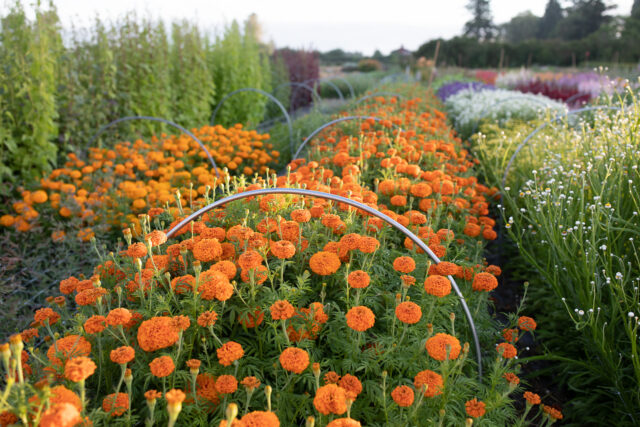
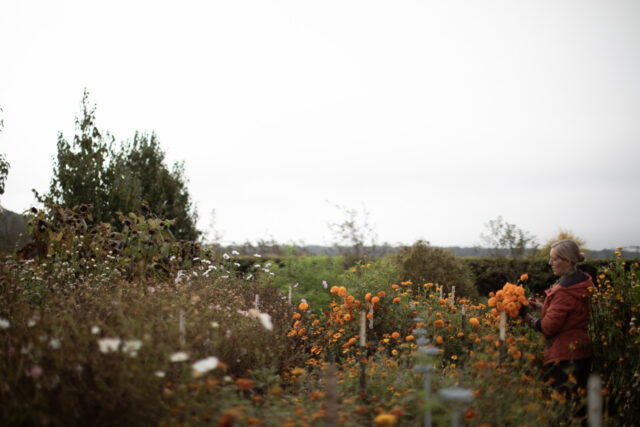 Start seed for these tender annuals indoors in trays 4 to 6 weeks before your last frost and transplant seedlings out after all danger of frost has passed. Marigolds can also be direct-seeded once the weather has warmed.
The taller varieties require staking or corralling to keep them from toppling under their weight when they are in full flower, but the shorter French varieties have a bushy stature and don’t typically need the extra support.
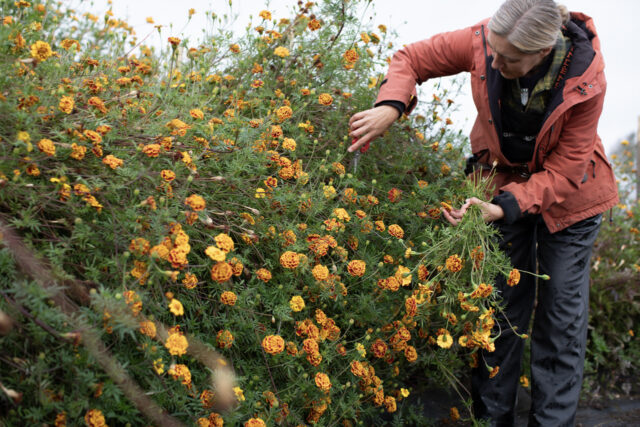
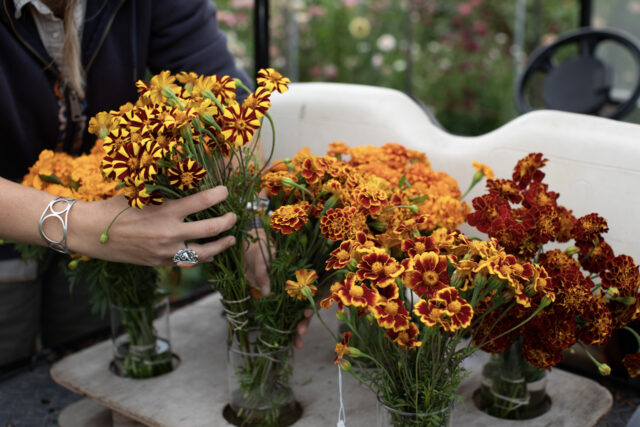 Harvest when flowers are about halfway open and strip most of the foliage off the main stem. Marigolds bloom from the base of the plant and their flowers open in succession, stair-stepping up the stems as they ripen, so oftentimes you will need to remove the lower, more tattered flowers before arranging with them.
Marigolds are a great addition to mixed bouquets and will easily last 7 to 10 days in the vase.
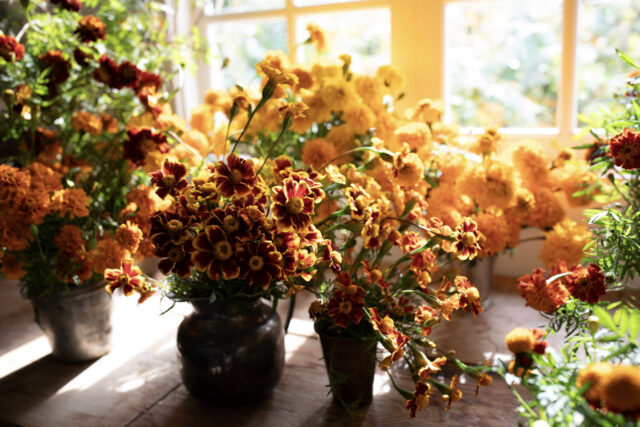 There are three main groups of marigolds that we grow here on the farm—African, French, and gem/signet—and over the years, we have trialed numerous varieties. Below you will find more information about each group and all of the varieties we’ve grown out.
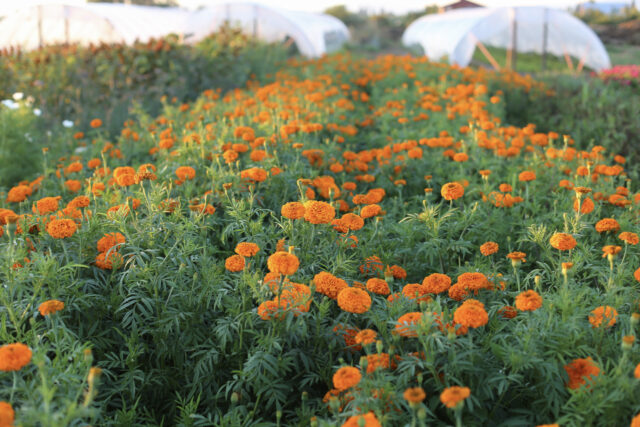 African Marigolds
The large-flowered African varieties are exceptionally long lasting, and because their blooms are so sturdy, they are a popular choice for garlands and leis. Back when we made hundreds of market bouquets each week, they were one of my favorite late-season flowers because they smelled wonderful, their fragrant leafy stems could double as a foliage ingredient, flowers had an exceptionally long vase life, and they added a bright pop of color that would draw customers in.
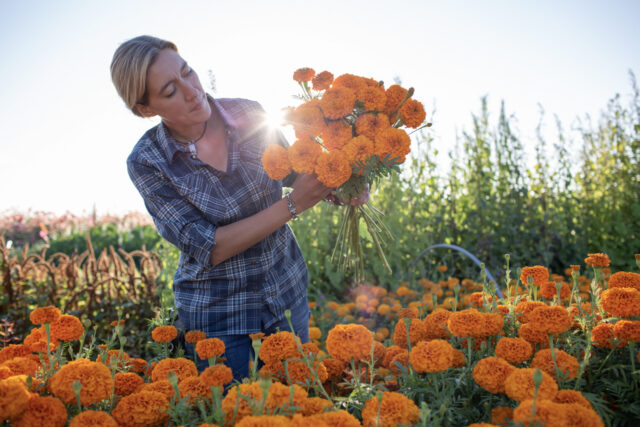
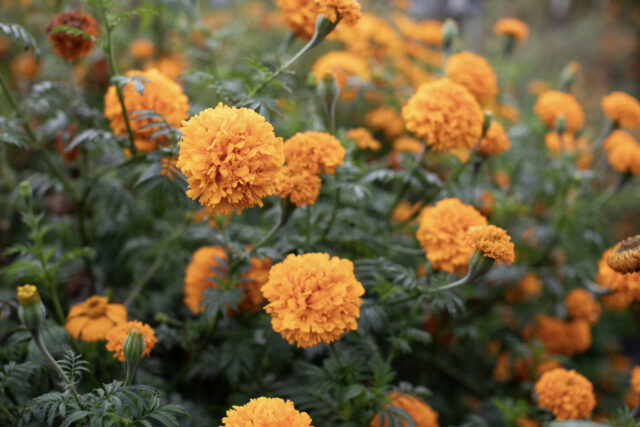
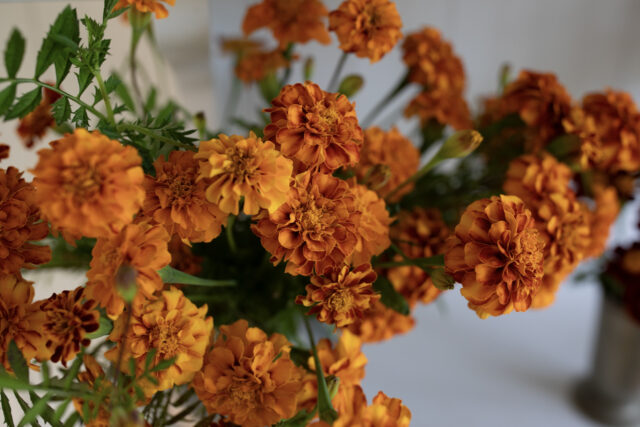
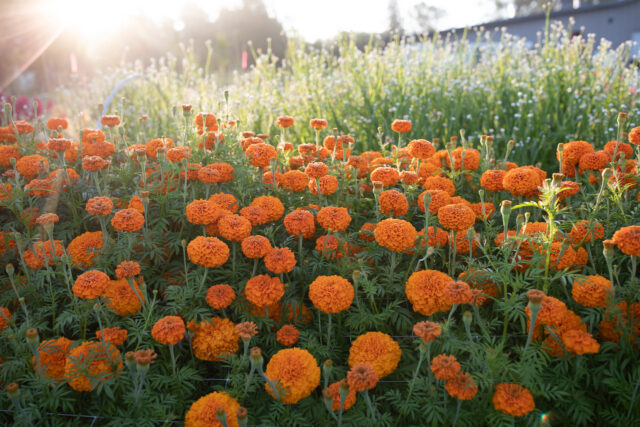 ‘Giant Orange’ (pictured above) produces 6 to 10 long, strong, branching stems topped with large, glowing saffron-colored blooms. This super-ruffled variety has tight green centers and lacy, scented foliage. This variety is fantastic for summer and autumn mixed bouquets and is also a great garden plant.
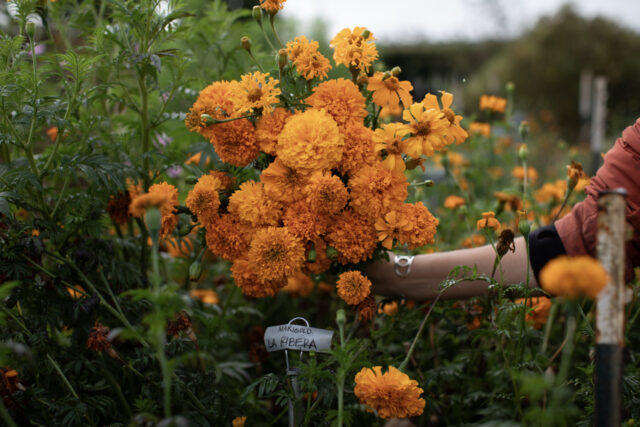
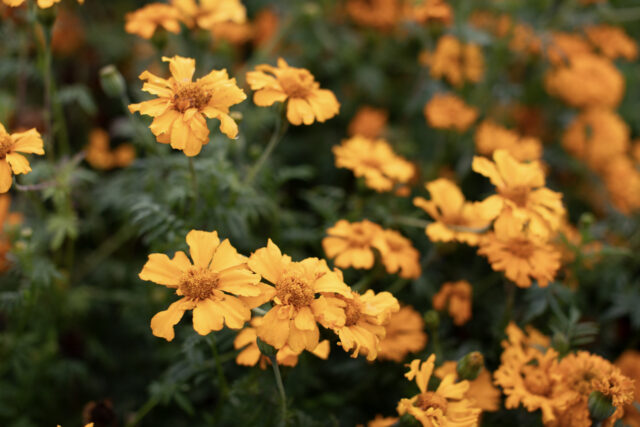 ‘La Ribera’ (pictured above) has large, fuzzy, tangerine flowers in a range of different forms, including fully double, semi-double, and single, as well as a few that don’t have any petals at all. The vigorous plants are enormous.
The flowers are too inconsistent for cut flower production, but this is a fun garden variety and a favorite with the crew on the farm.
 French Marigolds
The smaller French marigolds boast stunning color combinations and beautiful flower forms. They are great for containers or the front of the border, but because of their compact habit, some never get tall enough for cutting.
With the taller varieties, the trick is to wait until later in the season when their stems stretch and you’ll be able to pick stems that are just long enough for arranging.
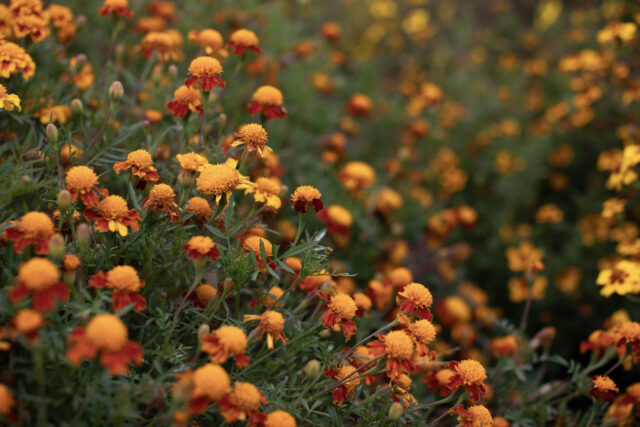
 Brocade Mix (pictured above) produces small, double, red-orange bicolor flowers. These stocky, low-growing plants are a delightful addition to the garden and are also well suited for pots and containers. Plants are on the short side, so for the longest stem length, wait to harvest until the end of the growing season.
‘Dainty Marietta’ (not pictured) has small, single, yellow flowers with dark burnt-red petal centers that are eye-catching from a distance. Plants are quite petite and are barely tall enough for cutting by season’s end. They are a great candidate for pots and containers.
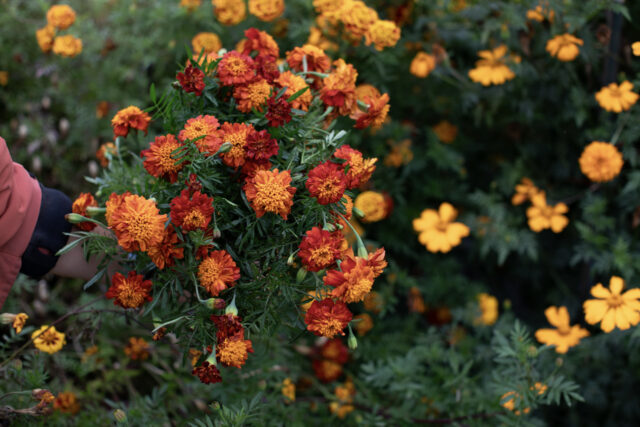
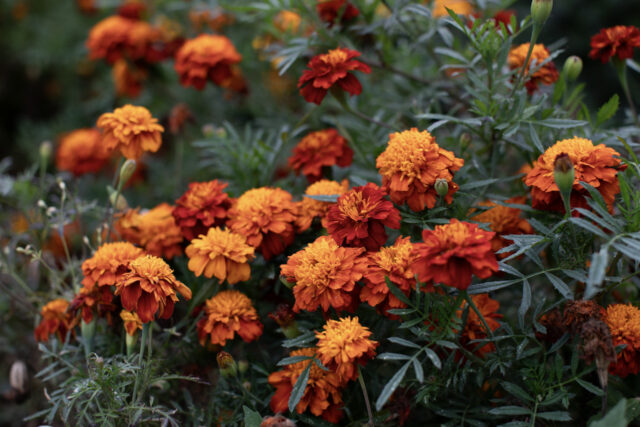 ‘Fireball’ (pictured above) produces flowers in an amazing combination of blackish red and burnt orange, but the bushy plants never get very tall, so it isn’t a great choice for cutting. They are worth growing for the color alone and make a perfect addition to pots and containers.
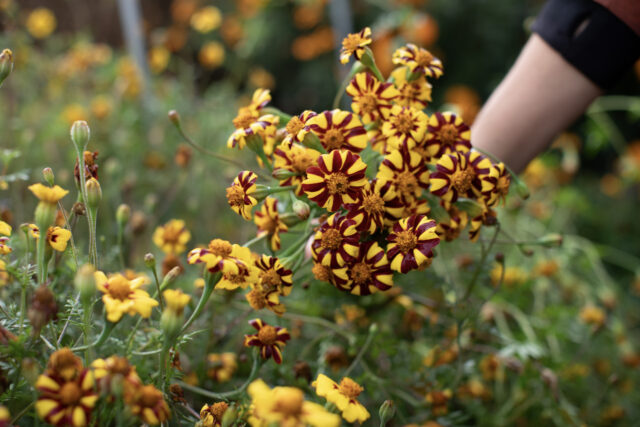
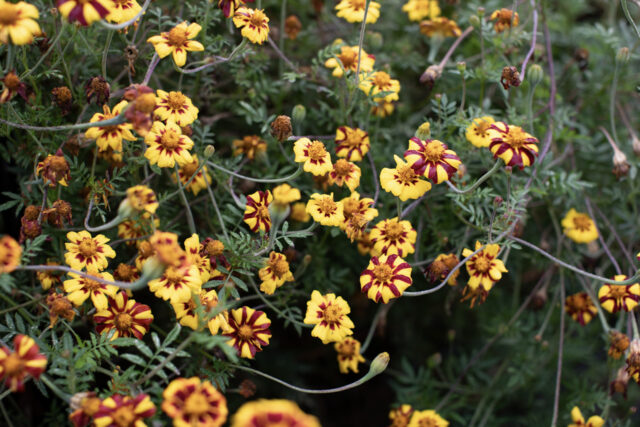
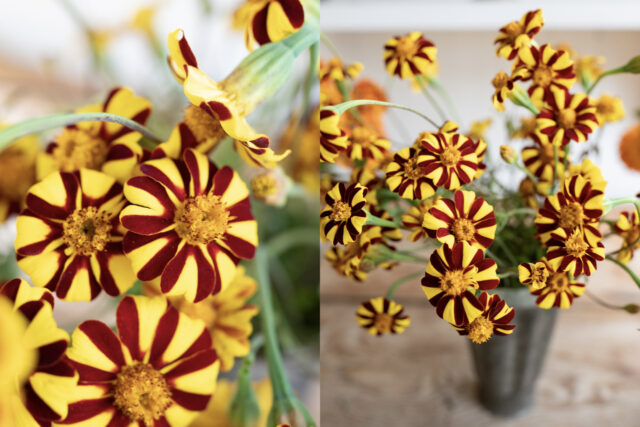 ‘Harlequin’ (pictured above), also called ‘Court Jester’, is a unique heirloom variety that produces an abundance of medium-size, maroon-and-gold-striped single blooms. Plants are airy in habit, with long, branching stems. The flowers look great in late-season bouquets, and the striped petals add a fun twist to arrangements.
‘Naughty Marietta’ (not pictured) produces single, gold flowers with burnt-red markings around the flower center and on the petal tips. They have a wildflower-like quality, and while their flower form isn’t very refined, there’s something about them that just makes you smile. Plants are on the short side, so for the longest stem length, wait to harvest until the end of the growing season. This variety is also great for pots and containers.
‘Strawberry Blonde’ (not pictured) is a compact plant that produces flowers in a range of rusty red, buttercream, and peach. While the color of the flowers is absolutely amazing, this variety has been somewhat disappointing since the plants are too short for cutting. We’ve tried all kinds of tricks (pinching, waiting until the end of the season, and tighter plant spacing) and none of them has helped improve its stem length. If you love these colors, it’s worth growing as a bedding plant and would do very well in containers or pots.
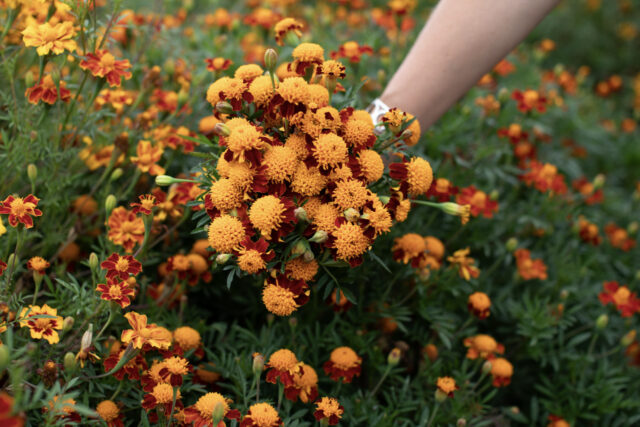
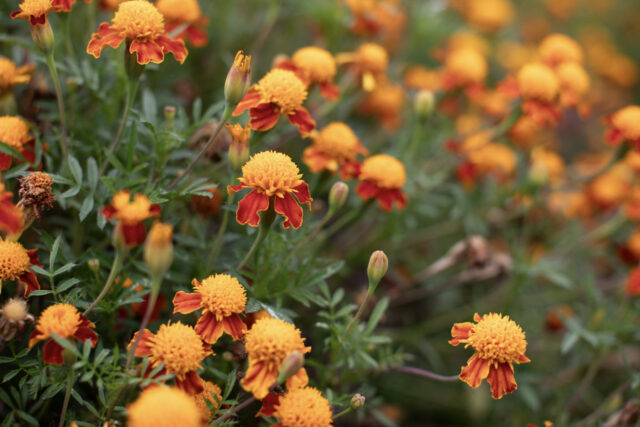 ‘Tiger Eyes’ (pictured above) is an interesting novelty with exaggerated golden-orange, fuzzy centers surrounded by short, burgundy petals. Plants reach about 2 ft in height at the end of the season, so if you’re patient they can be cut for autumn arrangements, but they aren’t a great candidate as a field-grown cut flower.
 Peace Seedlings Introductions
Over the past few years, I’ve trialed quite a few marigold varieties and have fallen in love with the treasures bred by a magical little seed farm in Oregon called Peace Seedlings. These wonderful creations have emerged from the breeding work of Mario and Dylana Kapuler, the farm’s owners, as well as from earlier work by Dylana’s parents under the name Peace Seeds.
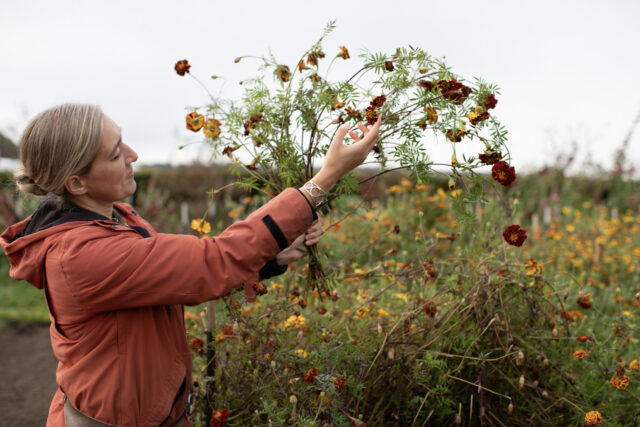
 They were bred by crossing French and African varieties, so they all have the unique coloring and smaller flower size of the French marigolds, but the robust growth habit, tall plant height, and long stems of the African plants. Although they start out smaller, if you let them grow they will eventually get tall enough for cutting. Their coloring and forms are very unique, giving you a lot to work with.
The flowers are borne in delicate sprays and they are a little time-consuming to pick because the stems are thin and sprawling, but they are great for arranging with and add a beautiful pop of seasonal color. They are perfect for hand-tied bouquets and mixed arrangements.
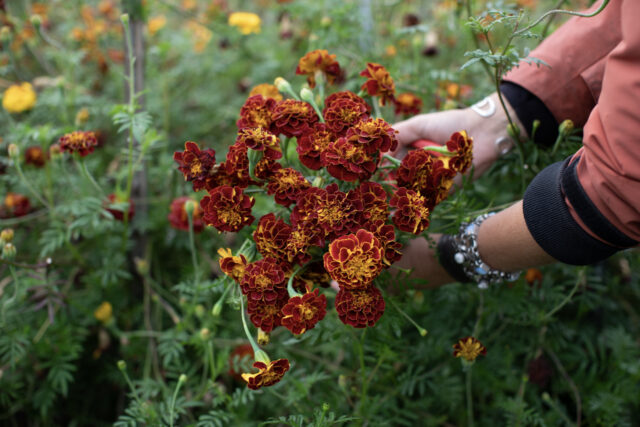
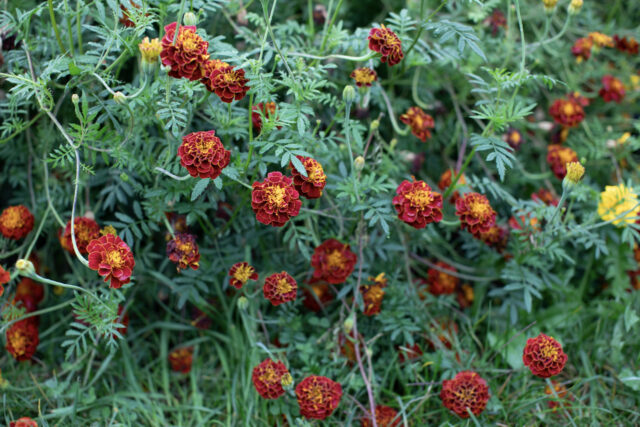
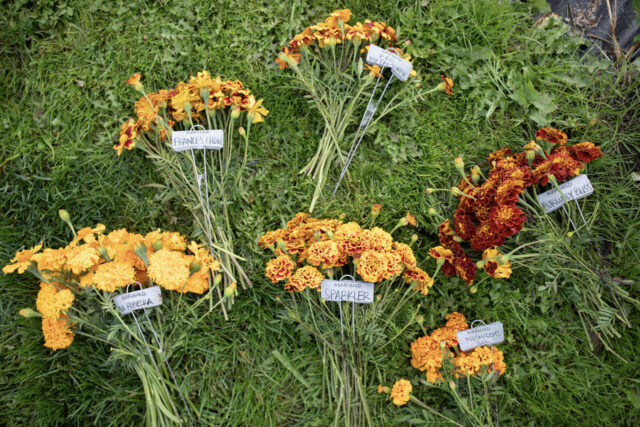
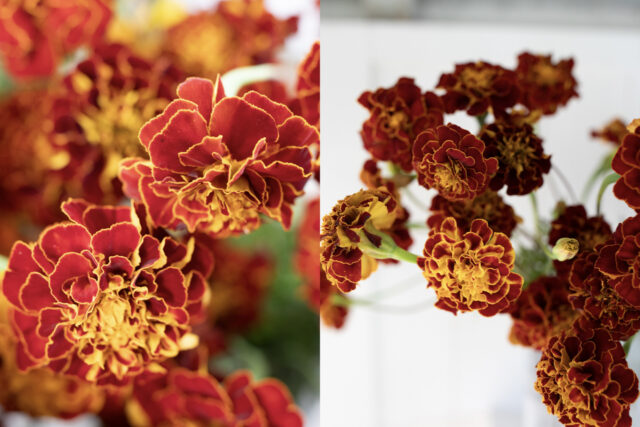 The deep rusty-red, double flowers of ‘Burgundy Bliss’ (pictured above) are outlined in a glowing golden-orange color that continues onto the backs of the petals, making for a lovely contrast. Flowers are borne on stems that are long and willowy, but still strong enough for cutting. Tall plants are heavily branching, with lots of side buds. They would be good for designers and in arrangements, but they may be a bit too rangey in habit for mixed bouquets.
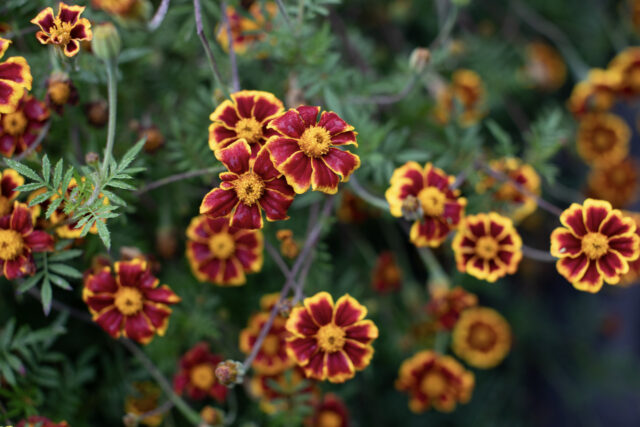
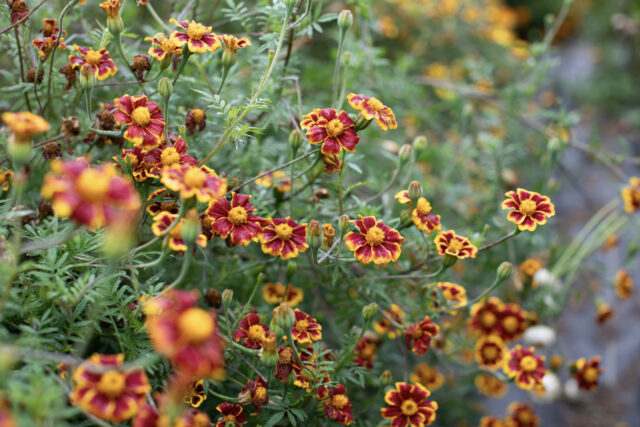
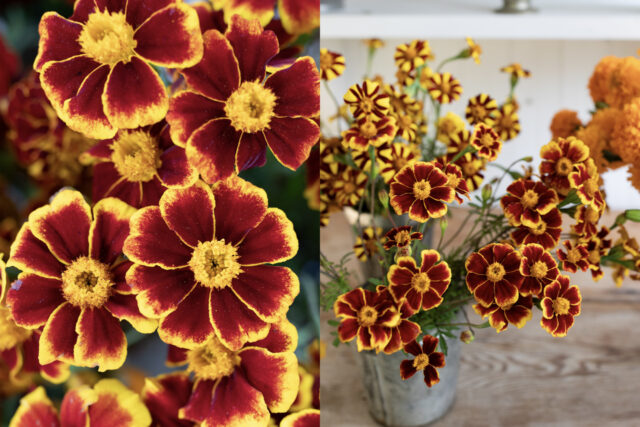 With its medium-size, single, rusty-red blooms edged in gold, ‘Frances’s Choice’ (pictured above) is a real standout. Towering plants produce densely branching stems that are long and thin and perfect for arranging with. This variety would be a game changer for late-summer and autumn bouquets.
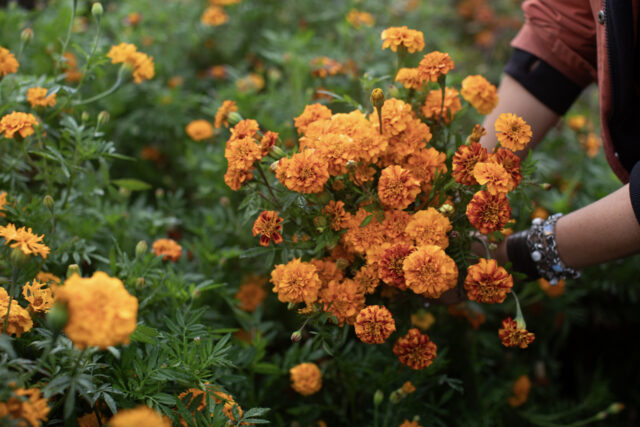
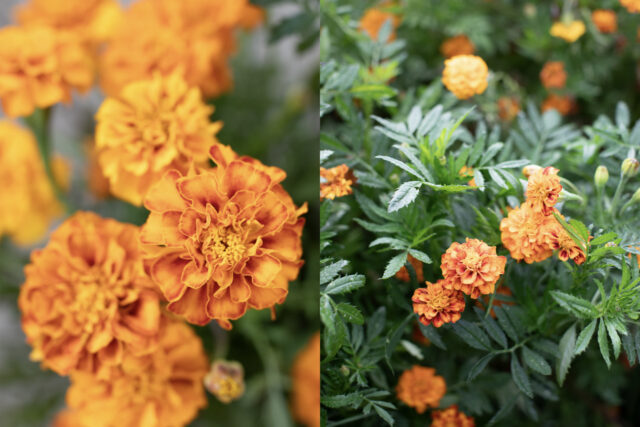 ‘Mushroom’s Sol’ (pictured above), the shortest of the Peace-bred marigolds, has small-medium, tangerine-colored flowers with rich red stripes on the inner part of the petals. Plants stretch as they grow, and by season’s end they produce stems that are long enough for mixed bouquets. While this variety requires a bit more time to mature, it has a lot of potential as a cut flower.
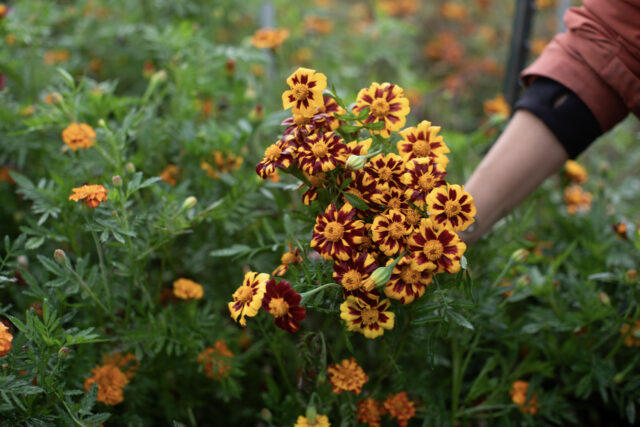
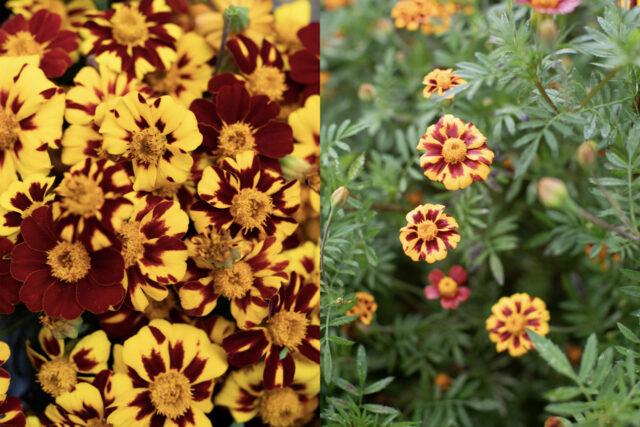 ‘Red Metamorph’ (pictured above) has single, golden blooms with red streaks and blotches in varying ranges of saturation. Knee-high plants have thick, dense foliage. The medium-size flowers are upward facing and could work well in late-season mixed bouquets. While the color and patterning aren’t consistent between plants, when combined they all look harmonious together.
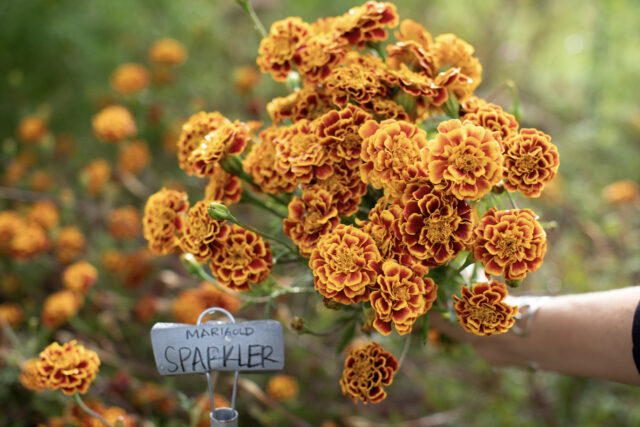
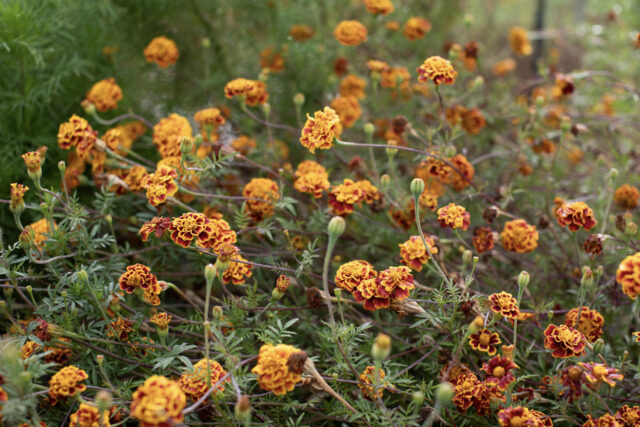
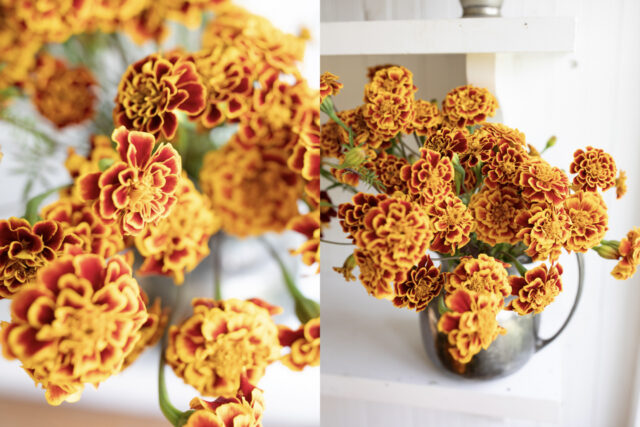 ‘Sparkler’ (pictured above) is a wonderful addition to the late-summer garden. Tall plants produce an abundance of medium-size golden flowers with rusty-red bands running down the center of each petal. Plants are heavily branching, and the flowers would be ideal for mixed bouquets and bunches.
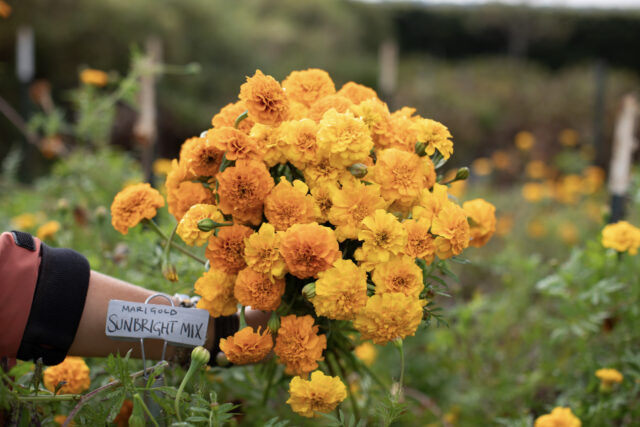
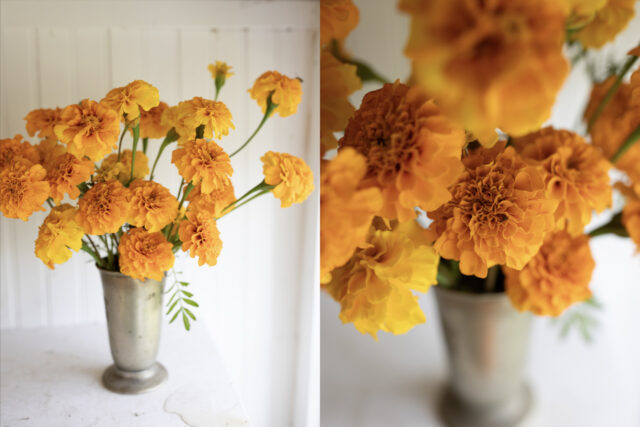 Sunbright Mix (pictured above) is the newest introduction from Peace. Tall plants have a very bushy habit and flowers are a mix of cheerful colors: sunny yellow with orange stripes on the edges of the petals, tangerine with yellow stripes, and solid tangerine. They remind me of candy corn, without the white.
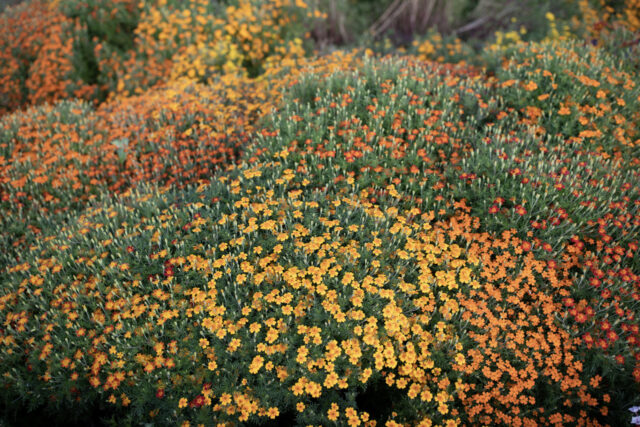 Gem/Signet Marigolds
Miniature-flowered varieties, also known as gem or signet marigolds, produce abundant, branching stems that are loaded with dozens of penny-size, glowing blooms in shades of red, orange, gold, and yellow, with numerous color variations and bicolors. Their ferny foliage is wilt resistant and has a clean citrusy fragrance, making them a summer bouquet staple. These compact varieties are well suited for pots and containers and I love tucking them along the edges of the rows in our vegetable garden.
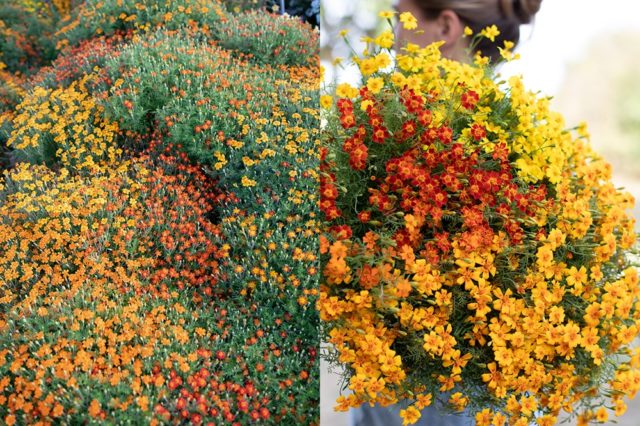 Starfire Mix (pictured above) is a cheerful blend of miniature-flowered marigolds and is a must-grow for mixed bouquets. Each plant produces branching stems that reach more than 30 in and are loaded with dozens of blooms in shades of red, orange, and gold, with numerous color variations and bicolors.
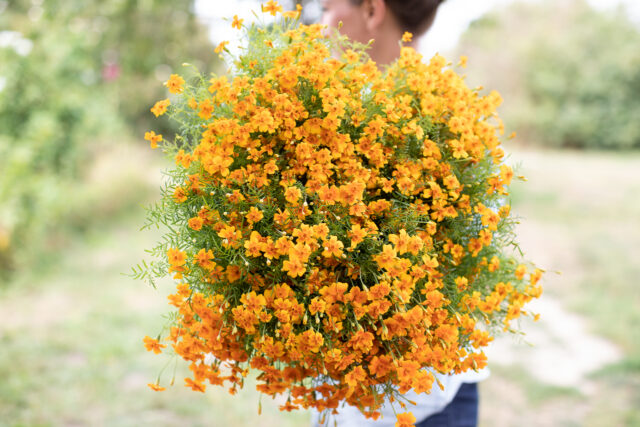
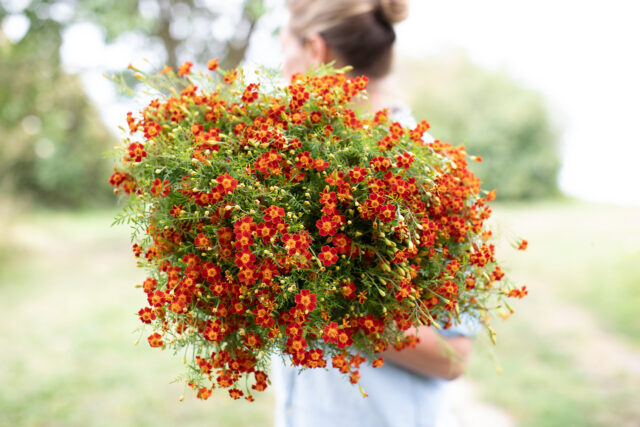 The gem varieties, such as ‘Tangerine Gem’, with its glowing tangerine blooms and darker orange centers, and ‘Red Gem’, with its brick-red petals and lighter orange centers, are very similar to Starfire Mix but their stems are slightly shorter, reaching around 24 in.
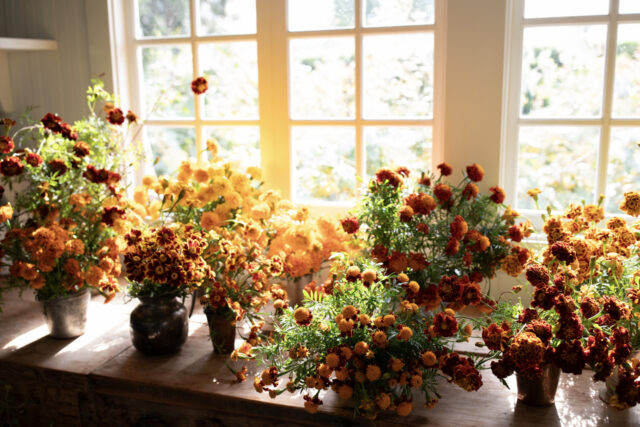 If you’re looking for some beautiful, hardworking plants that will produce abundantly throughout the summer and all the way into fall, I hope you’ll give some of these special varieties a try! You can find more photos and information in the Floret Library within the Seeds section.
Please note: If your comment doesn’t show up right away, sit tight; we have a spam filter that requires us to approve comments before they are published.

Michelle on
Hello,
I love marigolds for all of the reasons that you had mentioned, plus orange is my favorite colour. I was wondering if you could tell me how I can collect the seeds from this year and try planting them for next year. Also, I have many marigolds around my garden and I noticed that there were some growing in a small amount of dirt between two rocks. I know for a fact that I do not plant any marigolds in that location. Is it possible for the marigolds to self seed?
Thanks
Michelle:)