
I first connected with Milli Proust through Instagram and we’ve been penpals ever since, sharing advice and encouragement from afar. For those of you unfamiliar with her work, Milli and her business partner, Paris Alma, are the talented duo behind the seed company and floral design studio Alma | Proust, located in West Sussex, England.
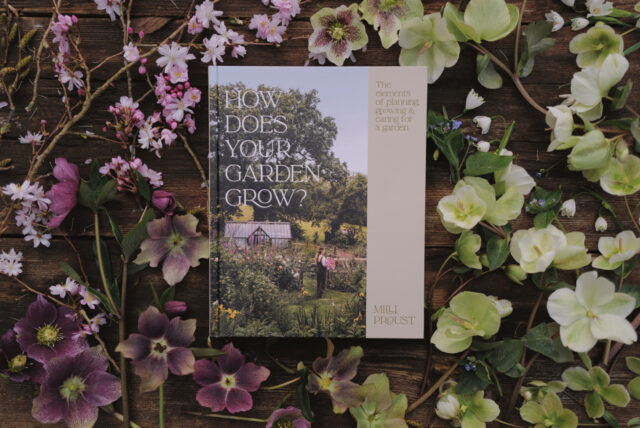
In addition to being an extremely talented floral designer, Milli is a gifted writer and published author on the subject of growing and arranging cut flowers. Today, I’m excited to share that her newest book, How Does Your Garden Grow?, is now available here in the U.S.
 I’ve been waiting for a book like this for such a long time, and I’m so happy that Milli took this subject head on. How Does Your Garden Grow? provides a much-needed solution to a problem that so many gardeners face—how to design a garden.
In its pages, Milli covers how to create a garden based on your needs, how to combine color and texture, suggested plant combinations and planting plans, and what to grow for year-round interest. What I love most about the book is that it’s process-based, so if you follow her steps, you will come out with a solid plan for your garden!
 I recently had the chance to interview Milli about her experience writing this book, her approach to biodiversity, her weekly creative practice, scheming up her new growing space, and her love for sweet peas.
Be sure to read through to the bottom of this post and leave a comment for a chance to win a copy of the book. Milli is such a beautiful writer, and I hope you enjoy the interview as much as I did.
Book photo above by Milli Proust.
 I’m endlessly fascinated by the many ways a book can come to life. Tell us about the process of writing How Does Your Garden Grow? What inspired you to tackle this daunting topic now, and what was the experience like?
This book has taken a long time to become fully realised. The experience of writing it was slower and steadier than my first book. The idea and the title had already come to me while I was still writing From Seed to Bloom in 2021. Then my editor Harriet Butt and designer Gemma Hayden came over to see me in the garden in autumn 2022, when my son Rex was about 10 weeks old, to celebrate From Seed to Bloom being out in the world for 3 months, and while we were together, we talked through what I wanted to make next.
 I told them about How Does Your Garden Grow? and how the idea of it was born from answering the same questions over and over again—from followers, customers, and people who were watching my flower farming journey unfold alongside my garden. What surprised me was that people were often more curious about the garden itself than anything else.
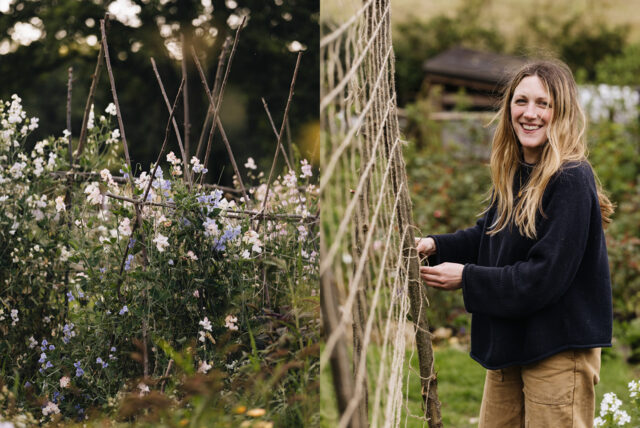
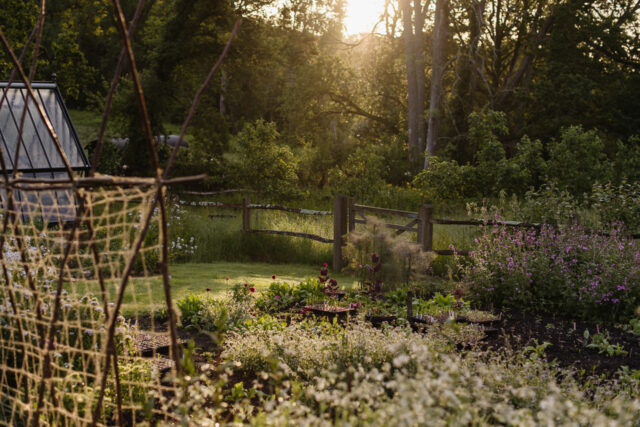
How I planned it, about soil health, and garden maintenance, how I worked with having interest through the year, how I made my wiggly fences and structures, how the garden fed into my floristry, and how it had changed me. How to design, plant, and tend to a garden that is both productive and beautiful. Then and there, the three of us agreed that a book that could answer all those questions would be a wonderful thing to put out into the world, and I’ve been working on it ever since.
 In the process, I was gathering together a decade of learning and trying to translate it into something useful and encouraging. A year into writing it, the shape and form of it really began to crystallise when my sister started a garden for the first time. She was asking these brilliant, honest, beginner questions, ones that I had thought the answers to were intuitive, and I really began to sense out the edges of what the book would be through her need for certain information.
I knew it needed to be something practical and reassuring, but also engaging and unpatronising—not taking any little bit of information or gardening terms for granted. Gardening can feel daunting because it’s tied up with time, expectation, and fear of getting it wrong. It’s been a fun one to write, because it feels like offering a hand and saying, you don’t need to know everything. You just need to begin, and here are all the small, actionable steps you need to take to start, grow, and thrive.
 Your book title comes from the classic nursery rhyme “Mary, Mary, Quite Contrary,” which asks, “Mary, Mary, quite contrary, / How does your garden grow? / With silver bells, and cockle shells, / And pretty maids all in a row.” It is also the title of a blog series you write. I’m curious why this line has stuck with you and whether there’s any deeper meaning.
There are many interpretations of the rhyme in folklore, some quite dark, but my preferred interpretation is the one I inferred when I was little. The most literal one, about a contrarian gardener called Mary with very specific tastes in plants. “How does your garden grow?” is such a good question, and one that I’m often asked in one form or another! I think it has a way of spanning and encompassing values, tastes, choices, time, and care. Everyone’s garden grows differently, shaped by circumstance, personality, and place. There’s no single right way. There’s just your way.
I like that the rhyme doesn’t offer an answer. It leaves room for imagination and interpretation. The title line has stayed with me for years because it feels both playful and defiant. I like that Mary is contrary. Seeing women in history described as difficult in some way gives me hope and makes me feel empowered with progress. I love the idea that Mary’s taste is so specific, and the image conjures her lining her paths with cockle shells, often associated with love, friendship, and protection, alongside spring-flowering silver bell trees. It feels like an invitation rather than a prescription, which is how I approach gardening.
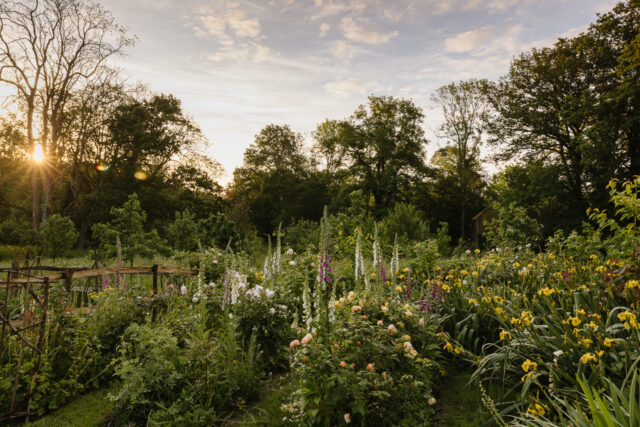
 The introduction in your book is beautifully written and so inspiring. I think a lot of people will identify with the way you talk about gardening, nature, and time. You say that “gardening is more than just growing things; it is a personal journey for each of us who do it, and in many ways, an act of legacy.” Can you share more about why you garden and what legacy you hope to leave?
I garden for many reasons. Partly because it connects me, not just to the physical land, which does so much for my general well-being, but because it connects me to time in a way nothing else does. Past, present, and future all exist together in the garden. When you plant something, you’re investing in a version of yourself you haven’t met yet, and perhaps in people you may never meet at all. Watching bulbs surface in spring that had nothing to do with my hand planting them always makes me feel connected to those who have come before.
I’m so grateful to the people who have left a trail of wisdom to follow and have been generous enough to share their knowledge, you included, so that I can be as good a gardener and grower as I can be in my lifetime. The legacy I care most about is not a specific garden or aesthetic, but knowledge and confidence being passed on. If someone reads the book and feels more capable, more curious, or more connected to the natural world, that feels like a meaningful thread to keep passing down to those who come next.
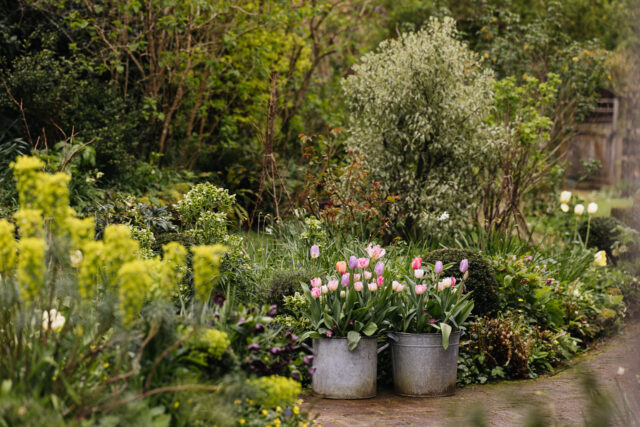
 You also talk about the reality of time in the garden. In the past 10 years, I have heard from so many gardeners who are struggling to keep up with their gardens because their lives have become so full, and they are always short on time. What advice do you have for those who feel this way?
If you can, release the idea that a garden must be kept up with, and refocus on the idea that gardening isn’t something to conquer or complete. It’s something grounding and nourishing that you can return to. And if it all goes upside down this year, if life throws too many curveballs to spend time in the garden, then there’s always next season.
A great piece of advice given to me, and always helpful to hear again, is to start small. Grow less. Focus on what brings you the most joy or usefulness. Even 10 intentional minutes in the garden can change how you feel about it. A great garden isn’t about perfection, it’s about presence and connection. It should enhance your life, not add stress to it.
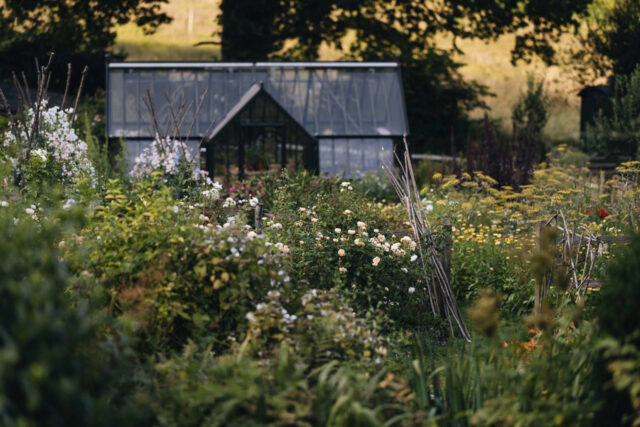
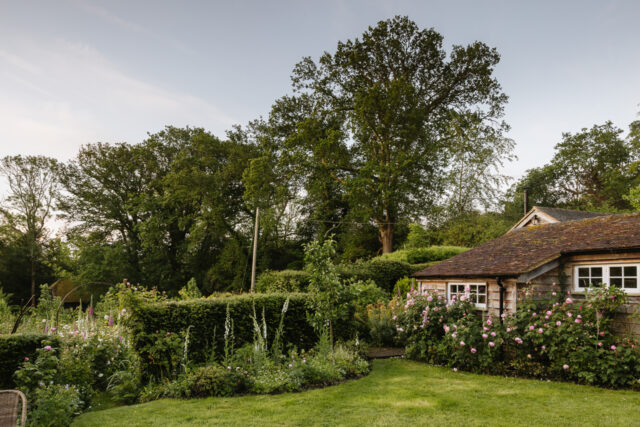
 I would always like to highlight that tending less can often give you more. My favorite part of the garden here is the mini orchard alongside the cutting garden. It is fully mown just once a year, with a winding path cut into it, and mown every few weeks in the summer. I grow bulbs in the rough meadow grasses under five fruit trees: apple, pear, cherry, greengage, and plum. The bulbs flower in relay, from snowdrops and crocus through to martagon lilies, spanning 8 months of interest.
Then there are rugged roses, astilbe, teasels, spindle, and the fruit trees themselves, which take us well into autumn. Even the lichen-clad branches and teasel seed heads are beautiful in winter. It has an almost continuous flow of beauty; it offers me flowers, grasses, seed heads, hips, and branches to bring into the house and fruit to eat. It is brimming with life and gives me so much joy and peace with very little annual maintenance.

 You explore integrating biodiversity into garden design, which is something we’ve worked toward here on the farm as well. I think the concept can feel a bit abstract, so I appreciate how you describe it in the book: “Biodiversity, as I interpret it, is the quiet brilliance at the heart of the natural world, a vast and delicate web of life, where every plant, creature and habitat has a role, a rhythm, a relationship.” For someone just starting out, what are the benefits of a biodiverse garden, and what are a few small ways they can begin encouraging this in their own spaces?
Embracing that vast web of life, much of which can’t be seen, allows a garden to fully come alive. I love walking through the garden being sung to by birds and entertained by butterflies and frogs. A biodiverse garden is more resilient, more teeming with life, and ultimately less work. When you allow a variety of plants, insects, birds, and microorganisms to coexist, the garden begins to balance itself.
A simple way to think of it is to make your garden a lovely place to exist for many. Provide shelter and food for as many creatures as possible. Plant shrubs, trees, and hedges. Plant flowers that bloom at different times. Leave seed heads standing through winter. Avoid overtidying. Let things complete their life cycles.

 You’ve done such a good job exploring color in How Does Your Garden Grow?—this is always one of the most intimidating subjects in both garden and floral design. Someday, I would love it if you’d write an entire book devoted to this topic and your unique approach to it. Is there any chance we’d be lucky enough to get that?
I would love that. Colour is endlessly fascinating to me. It’s one of the most emotional and intuitive aspects of both gardening and floristry. I’m not sure when or how a longer-form project on colour would arrive, or whether it would be through gardens or floristry, but it’s definitely a subject that still feels very alive for me. I would be thrilled to explore it more deeply.

 What is your greatest hope for this book? What do you most want someone to take away after reading it?
I hope readers feel encouraged rather than instructed. There’s a lot of practical information in the book, but I wanted it to feel more like a tool than an instruction manual. I’d love to imagine the world slowly filling with more gardens and more gardeners who feel confident using their outdoor space as an extension of their home.
In my early twenties, I thought I didn’t have a green thumb. Now, when someone tells me they don’t, it causes me real anguish. I truly believe gardening is for everyone. Maybe they just haven’t been given the tools and confidence yet. Gardening is a relationship, not a performance. It can feel like others have it all figured out, or that the knowledge is gatekept, but tending plants is such a human instinct. The more of us who do it, the better. I hope anyone who reads it comes away feeling capable, inspired, and ready to get stuck in.
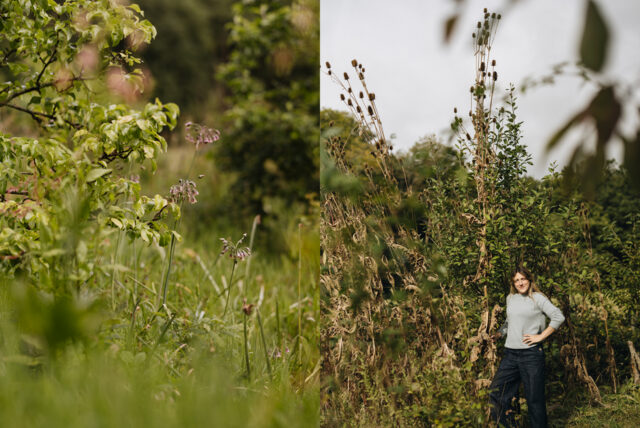 I have to mention that you’re officially a Guinness World Record holder for growing the world’s tallest teasel! Special seeds from this record-breaking plant were included with book pre-orders from your shop, which I thought was such a fun idea. You mentioned on Instagram that this was a “childhood dream unlocked.” What other childhood dreams do you wish to unlock in the future?
Isn’t that the funniest thing? It gave me so much laughter and joy last year. My siblings and I used to pore over the record book trying to find one we could attempt. It was thrilling and completely unexpected to get a record.
I’ve learned not to be too specific about dreams anymore. Some of the most meaningful ones have arrived sideways, so I’m following my skills and curiosity more actively instead. But I do hope to keep learning, breeding plants, writing, and passing knowledge on. And to remain open to wonder. That feels like a childhood dream worth protecting.
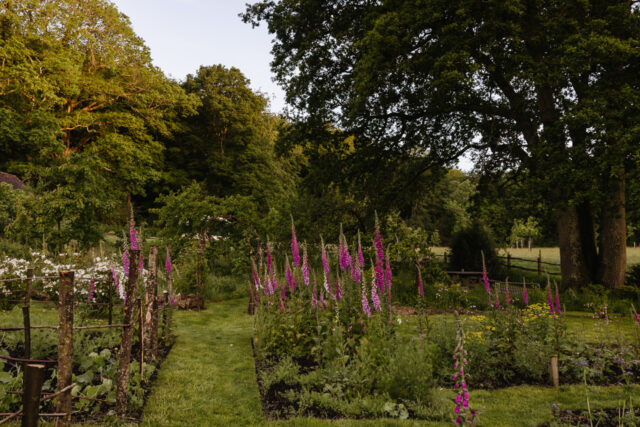
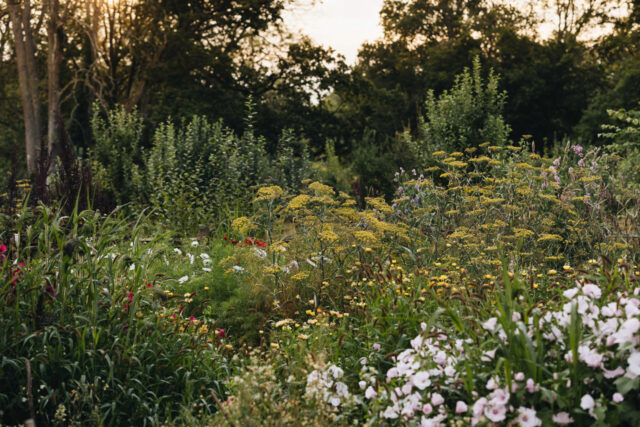 You’ve recently said goodbye to the garden we see in the pages of How Does Your Garden Grow? and moved to a new home, where you’re starting from scratch. How are you going about designing this fresh space? Do you have the luxury of observing your garden space for a year as you suggest in your book? What lessons have you learned that you’ll carry forward, and what questions are you asking yourself as you begin again?
Starting again has been both humbling and exciting. I won’t wait a whole year to start; I’m already getting stuck in but I am making sure to take the time to observe carefully, watching the light, the soil, the weather, and how the space wants to be used. The questions I’ve been asking are, How do I want to feel here? What does this place need? What can grow well with less effort? I can’t wait to watch it all begin to grow.
It has rained almost every single day since I got to the new garden. It’s been difficult to sit on my hands and wait to plant while the ground has flooded, but I’ve been spending the time visualising the layout and how I want it to feel. It looks like a mud pit at the moment and is very much a blank slate.
 I’ve used this winter to get the paths in, and I wanted flowing water. It’s a very wet site, so harnessing that and leaning into it, asking the water to flow into certain parts, making a pond and digging a trench for a stream to move through, has been muddy and fun. It also means I can plant a diverse range of plants, from pond dwellers and bank dwellers to the borders I’m more used to planting.
The last garden, the one in the book, I began with so little know-how that it was a steep learning curve and lots of unexpected delight. It’s a good feeling to be starting a garden equipped with knowledge and hard-won experience this time around. This will be a completely different journey, and this time I know just how beautiful it can become, how much potential there is, so I’m excited. I’ll be sharing the journey, and choices I’ll make and how and why, so do follow along.

 Were there any special plants that you were able to move with you to the new property? Was it especially challenging to leave anything behind?
I’ve taken a lot of cuttings, but I left everything in the ground there. I didn’t want to dig anything up. It’s all so happy there.
The hardest thing to leave behind was my collection of 200 roses. They were mostly given to me by friends and family for birthdays and Christmas, so they all held sentimental stories and memories of my loved ones. I like to think of them still growing happily and bringing joy to their new custodians. That gives me enough peace to let it go.

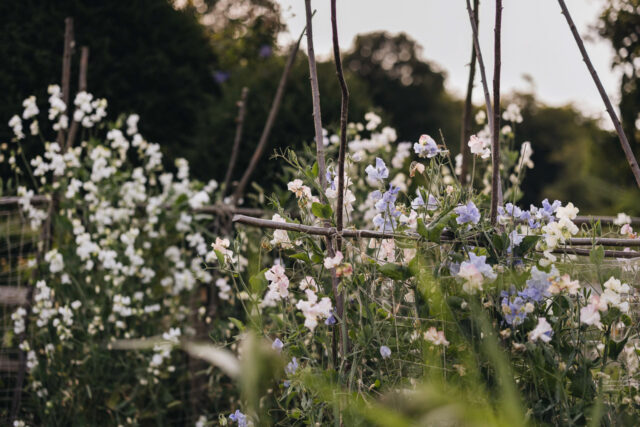 What are you most excited about growing in your garden this year? Can you share some of your cut flower garden stalwarts and some of the things you hope to experiment with in this new space?
I’m excited to establish more roses here, alongside room to experiment. It’s a slightly different set of conditions on the new site, so I’m enjoying giving myself permission to try things I haven’t been able to grow before, without expectation.
I’ve never had huge success with bearded iris, but now that I’m on sandy soil, I can’t wait to build a collection of those. And sweet peas. I can’t go a season without them, so the first of those are already in the ground.

 You’ve talked about no longer seeing gardening as “control or ornament, but as collaboration.” What’s important about that shift in perspective, and how do you personally relinquish control in the garden, especially when you’re dreaming of what could be?
When I only had access to window boxes, I imagined quite clearly the garden of my dreams. But when you’re knee-deep in mud, in thunderous rain, grappling with whips of rose thorns, the ideas of control and ornament quickly go out of the window. There were early moments when gardening felt wretched and I didn’t enjoy it at all.
I think it’s important to say that you can absolutely be a fair-weather gardener and still have a garden of your dreams. But I’ve come to love getting stuck into the rough stuff too.
Relinquishing control looked like finally learning to listen to the garden. To notice what thrived, which volunteer plants showed up, and what didn’t want to stay. Then I started to let the land guide me. Collaborating with the plants, the wildlife, and the space has made gardening so much more joyful and easeful.
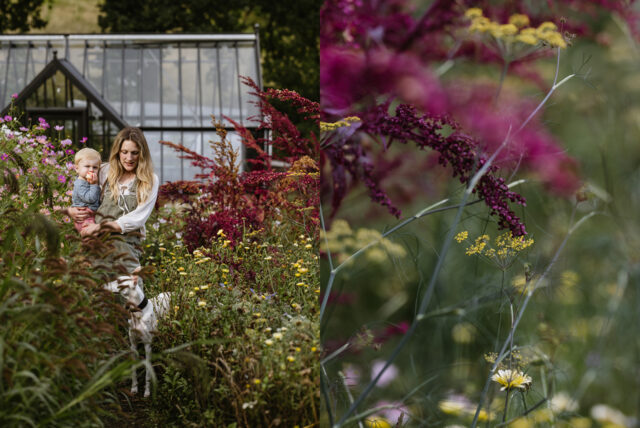
 Since the last time we talked to you on the blog, you’ve become a mother, gained a wonderful new business partner, grown your seed business, written another book, and moved homes. Beyond the new garden and getting this new book out into the world, what are you focusing on now, and what might come next?
This year, I’m focusing on sustainability in the widest sense. Personal, creative, and ecological. That said, there’s still lots on. In the seed business, Paris and I are working on learning more skills to get the very best seeds from our plants as possible, and we have plans to continue experimenting with breeding.
I’ll be planting up the new garden, and then beyond the new home garden, I’m working with my friend and gardener Charlie Harpur to plant an experimental garden at the flower studio, where we do all of our design and seed work. We’re trying to create as many different microhabitats as possible in a small space, building a mosaic of differences to encourage wide biodiversity of plants and microbes, while aiming for it to be outrageously, jaw-droppingly beautiful too. We’re searching for the ultimate meeting point between ecology and beauty. I’ll let you know how it goes.
I’m still learning about being a mother alongside growing a business and about managing my time meaningfully now that there are more precious things requiring it. Protecting what matters most while continuing to grow thoughtfully rather than endlessly is my focus this year.
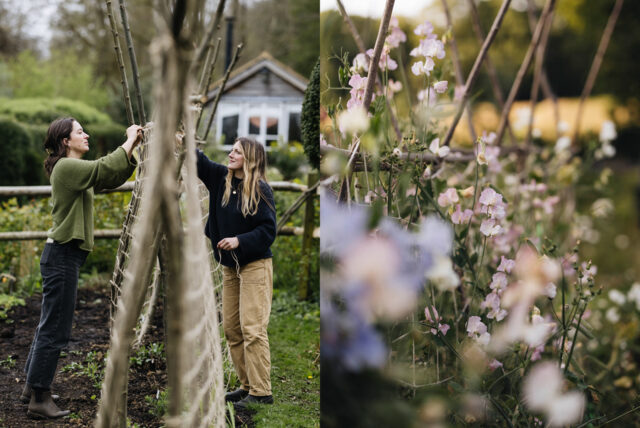
 Sweet peas seem to have captured your attention—I heard you’re trialing 130 different varieties of sweet peas this year and know you’ve joined the National Sweet Pea Society and started dabbling in breeding. I loved your wonderful interview with Roger Parsons on the Alma | Proust blog—he’s a treasure. What is it about sweet peas that draws you in, and what are you hoping to achieve with this work?
It keeps growing. The list is around 150 now.
Paris and I do the trials for a couple of reasons. Partly because I’m greedy and really want to look at them all. I want to see the colours for myself and inhale the scent of each one. They all smell different. Some are like watermelon, some zesty like lime. I want to see how well they stand up to stress, how the stem lengths vary, and how well they set seed.
 Paris is a long-time, self-proclaimed sweet pea obsessive. I think I was hooked by how easy they are to grow, how confidence-giving they are, how generous. They tease out smiles from anyone who receives them. They can be grown in containers or in the ground, so even if you don’t have much space, you can still grow them and have abundance.
The botanical side of my brain wants to work out how to get the very best from them. The breeding feels like a long, joyful conversation with time, and I’m enjoying learning how to listen to that part of it. We’re 3 years into making our first crosses, and it’s so exciting waiting to see what reveals itself this year.
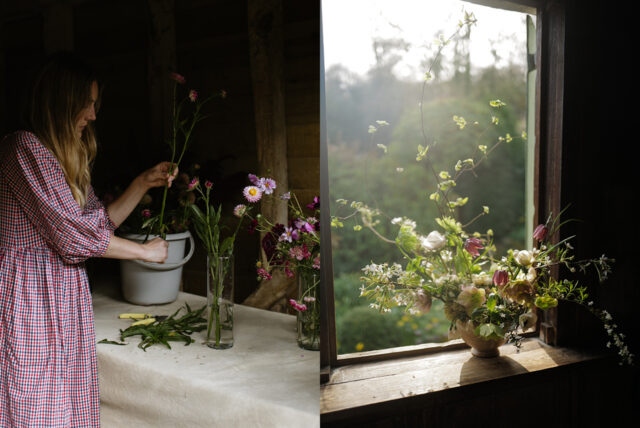
 You’ve continued your beloved “Windowsill Wednesday” series on Instagram for more than 9 years now. How has this creative practice evolved over time, and what do you still get from the process of making and writing about something each week?
It’s my favourite way of marking time. A creative anchor. It reminds me to notice, to practice, and to stay connected to why I began. If I didn’t deliberately set aside that time each week, I’m not sure how often I would connect with flowers in that creative way now. Between mothering and work, time feels tighter than ever.
Flower arrangement photos above by Milli Proust.

 So having a project I’m committed to, something almost sacred each week, even if there isn’t enough time, is how I keep my hands and heart full of flowers and colour. Even if I only have 5 minutes, I still try to do it every week. The restriction of less time has helped me let go of a long-held need for perfection, and I’m grateful for that. There’s always something to learn from the project, even after all this time.
Photos above by Milli Proust.

 Last summer, you and Paris traveled all the way from England to visit the farm, and it was such an inspiring 2 days. I especially enjoyed our conversation on seed saving and time travel. How Does Your Garden Grow? has a related quote I love: “Seeds, cuttings, and plants all hold the past, present, and future within them. . . . When we pass down plant knowledge, whether through books, conversations or the simple act of giving someone a cutting or a packet of seeds, we’re keeping something alive that’s bigger than any one garden.” This is something I’m also struck by and explore in my upcoming book about saving flower seeds. Can you share more about what this means to you?
We can’t thank you enough for all we learnt during our time with you on the farm! I’m so excited for your book on saving flower seeds. It feels like such an important skill to keep alive. In my mind, seeds are memory made tangible, and they carry history, possibility, and responsibility all at once. When we save seeds or pass on plant knowledge, I don’t think it’s overblown to say we’re participating in something much larger than ourselves. That feels especially meaningful now.
In uncertain times, I really think these small acts of continuity matter. They keep stories, skills, and relationships alive. Seeds make me feel deeply connected to the hands that came before us, the hands that teased food, medicine, and beauty from the land for us all to share. They make me feel connected to the whole web of life. The skills of seed saving and seed sowing feel among the most precious and important things to share and pass on.
Photos above at Floret by Milli Proust and Chris Benzakein. Book photo below by Milli Proust.

 Milli, thank you for taking the time to answer my questions and for your beautiful and thoughtful answers. This book is going to be such a gift for new and aspiring gardeners everywhere.
All photos in this interview, except as noted, are by Éva Németh.
To celebrate the release of Milli’s new book, How Does Your Garden Grow?, we’re giving away five copies. For a chance to win, simply post a comment below telling us what your biggest struggle is when it comes to garden planning. Winners will be announced on March 17.
To learn more and connect with Milli, be sure to visit her website and follow her on Instagram. How Does Your Garden Grow? is available from Amazon, Bookshop, Barnes & Noble, and your favorite local bookstore.
Please note: If your comment doesn’t show up right away, sit tight; we have a spam filter that requires us to approve comments before they are published.
Floret only lists companies and products that we love, use, and recommend. All opinions expressed here are our own and Floret does not offer sponsored content or accept money for editorial reviews. If you buy something using the retail links in this post, Floret may receive a small commission. Thank you for your support!

Victoria Smith on
My challenges (“struggle” feels a bit overblown after 60+ years of gardening) are minimal and for the most part well balanced by the daily delights and joy I find in my gardening life. Five years ago, I moved to the PNW after 34 years in the central California desert, and I’m still adapting to the much cooler climate, the lack of sunshine, and the greatly shortened growing season. I miss being outdoors year-round, and take a four to six week trip to California each November to delay the onset of winter and to enjoy the extra hour of sunshine gained by traveling 1200 miles south. I met a lifetime goal of becoming a master gardener when I arrived in Washington during the pandemic; the studying and internship carried me through that first long winter, gave me info and insight for local conditions and new-to-me plants, and helped me meet passionate gardeners who share my interests. I teach gardening classes on both sides of the US/Canada border, and enjoy the privilege of working with gardeners of all ages, cultures, and diverse backgrounds, who bring as much joy to my life as I hope to contribute to theirs.